

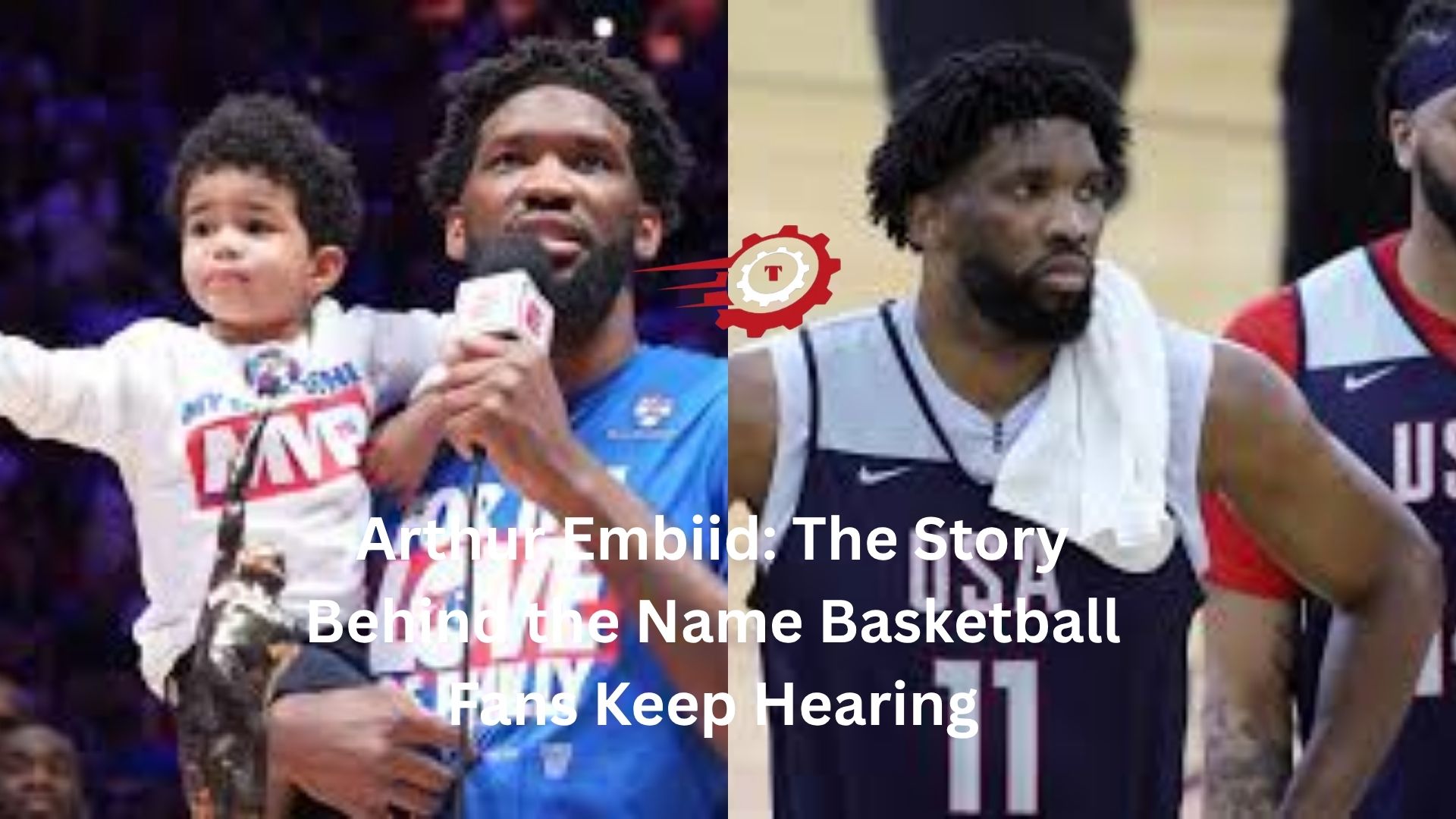
If you follow the NBA even casually, chances are you’ve seen the clips.
A little kid running toward the court after a big game. Tiny sneakers. Huge smile. Joel Embiid grinning in a way that feels completely different from his usual on-court swagger. For a second, the MVP talk, injuries, playoff pressure, and Philadelphia chaos all disappear.
That kid is Arthur Embiid.
And honestly, people aren’t interested in him just because he’s the son of Joel Embiid. There’s a deeper reason the name sticks with fans.
Arthur represents something personal in Joel’s life. Something heavier than basketball.
Once you know the full story, those quick family moments courtside hit differently.
The name Arthur means more than most people realize
Here’s the thing. Arthur wasn’t just a random family name.
Joel Embiid named his son after his younger brother, Arthur, who died in a tragic car accident in Cameroon back in 2014. Joel was still early in his NBA journey then. He hadn’t even fully become the version of himself the basketball world knows now.
People close to him have said that loss changed him forever.
And you can kind of see it.
Athletes usually talk about motivation in predictable ways. Championships. Legacy. Doubters. Respect. Joel talks about family a lot more than most superstars do. Especially when Arthur comes up.
When his son was born in 2020, it felt less like a celebrity baby announcement and more like a personal tribute. A way of carrying someone forward instead of leaving them behind.
That emotional layer is a big reason fans connect with the story. Even people who don’t support the Philadelphia 76ers tend to soften when they see Joel with his son.
Basketball suddenly stops feeling like the main plot.
Fatherhood clearly changed Joel Embiid
You hear athletes say becoming a parent changed them all the time. Sometimes it sounds rehearsed. Like media-day material.
With Joel, it feels real.
Before fatherhood, he was already a dominant player, but he also carried this chaotic energy. Funny online. Constantly trolling opponents. Sometimes immature. Sometimes reckless. Entertaining, sure, but unpredictable.
After Arthur was born, something shifted.
Not completely. Joel still jokes around. He still talks trash. That part of him never disappeared. But there’s more balance now. More patience. More perspective.
You can actually notice it in interviews.
A lot of parents know this feeling. Your priorities don’t magically become perfect overnight, but the center of gravity changes. Suddenly your day revolves around someone else. Even your career decisions start filtering through a different lens.
Joel has openly talked about wanting his son to see him at his best. Not just as a basketball player, but as a man.
That’s relatable whether you care about sports or not.
A parent trying to become better because a child is watching? That story works everywhere.
Arthur accidentally became a fan favorite
What makes Arthur Embiid interesting is that nobody tried to market him into internet fame.
It just happened naturally.
One of the biggest moments came during Joel’s 2023 MVP celebration. Arthur wandered around the stage while his dad gave one of the most emotional speeches of his career. Instead of feeling staged, it felt messy in the most human way possible.
Kids don’t care about television timing.
They don’t care about dramatic music or legacy narratives.
Arthur was just being a kid.
That moment probably made Joel more relatable than any press conference ever could.
Sports fans are used to seeing athletes as machines. Especially dominant players. They’re discussed like statistics with legs. Efficiency ratings. Injury reports. Salary cap numbers.
Then suddenly there’s this little child hugging his father while cameras flash everywhere.
It cuts through all the noise.
Another reason fans like Arthur is simple: kids bring honesty into heavily managed environments. Postgame interviews are polished. Social media accounts are curated. Brand partnerships are calculated.
Kids ruin the script.
And people love that.
The pressure of growing up around fame
Now, let’s be honest. Being the child of a global sports star is complicated.
From the outside, it looks glamorous. Courtside seats. Expensive clothes. Attention everywhere. But fame creates weird expectations early.
Every public appearance becomes content.
Every cute moment gets clipped and reposted.
That’s a strange environment for any child.
There’s also the unavoidable basketball question hanging over him already. People joke about whether Arthur will become a future NBA player because his father is seven feet tall and one of the most talented centers alive.
But kids aren’t video game franchises. Talent doesn’t transfer automatically.
And honestly, there’s something unfair about placing future expectations on a child before he even understands multiplication tables.
One thing Joel seems protective about is letting Arthur simply enjoy being young. You don’t get the sense he’s trying to turn him into some basketball project.
That matters.
Some sports families accidentally turn childhood into training camp. Every hobby becomes preparation. Every moment gets optimized.
The healthier approach is usually the obvious one: let the kid be a kid first.
Why fans connect with family moments in sports
Sports culture has changed a lot over the last decade.
Fans used to mostly care about dominance. Toughness. Winning at all costs.
Now people are drawn to personality and vulnerability too.
That’s partly why Arthur Embiid resonates online. He gives people a glimpse of Joel outside the arena. Not the scoring champion. Not the MVP candidate. Just a dad trying to make his son laugh.
And there’s something universal there.
You don’t need to understand basketball schemes to appreciate a father carrying his sleepy kid after a game.
You don’t need advanced stats to understand pride.
A small example: plenty of parents know the feeling of having a rough workday, then coming home and instantly forgetting half the stress because their child runs toward them at the door.
That emotional reset exists whether you work construction, teach school, drive trucks, or play in the NBA.
The scale changes. The feeling doesn’t.
Arthur also represents healing
This part matters most.
Arthur Embiid’s story isn’t really about celebrity family life. At its core, it’s about grief and healing living side by side.
Joel lost his younger brother at a critical point in his life. Success was arriving professionally while pain hit personally. That combination can mess people up for years.
Naming his son Arthur wasn’t just sentimental. It was restorative.
Not replacement. That’s impossible.
But continuation.
A reminder that love doesn’t completely disappear after loss. It changes form. It moves into memory, rituals, names, stories, habits.
A lot of families do this quietly. Maybe someone names a child after a grandfather. Maybe an old jacket gets preserved for decades. Maybe recipes stay untouched because they carry emotional weight.
These things sound small until you experience loss yourself.
Then they become anchors.
That’s why so many people connect emotionally to Arthur’s name once they hear the backstory.
The internet sees only small moments
Most people know Arthur through short clips.
Hugging his dad after games.
Interrupting interviews.
Walking around NBA arenas looking confused and adorable while thousands of fans scream in the background.
But internet clips flatten real life.
What people don’t see are the ordinary moments that actually shape families. Breakfast before school. Random toy messes on the floor. Bedtime arguments. Weekend routines. Tiny conversations nobody records.
That’s where real parenting happens.
And honestly, that’s probably where Joel values the relationship most too.
Not during viral moments.
Not during ESPN broadcasts.
Just normal life.
Sometimes celebrity culture makes us forget famous people still have regular emotional lives behind all the production. Kids still wake up cranky. Parents still get tired. Families still argue over dumb things.
Fame adds visibility. It doesn’t erase humanity.
There’s a reason the story keeps growing
Arthur Embiid will probably remain part of basketball conversations for years, especially as Joel’s career continues evolving.
Fans remember emotional stories. Not just championships.
And this story has emotional gravity because it blends joy and sadness together in a very human way.
A superstar loses his brother.
Years later, he names his son after him.
That son becomes the emotional center of his public life.
You don’t need a Hollywood writer to make that meaningful. It already is.
The best sports stories usually aren’t about trophies anyway. They’re about people trying to carry love, pressure, grief, ambition, and family all at once without falling apart.
That’s what makes Arthur Embiid interesting.
Not because he’s famous.
Not because he appears on camera.
But because his story quietly reveals a different side of one of basketball’s biggest stars.
And honestly, those moments tend to last longer in people’s minds than box scores ever do.
