

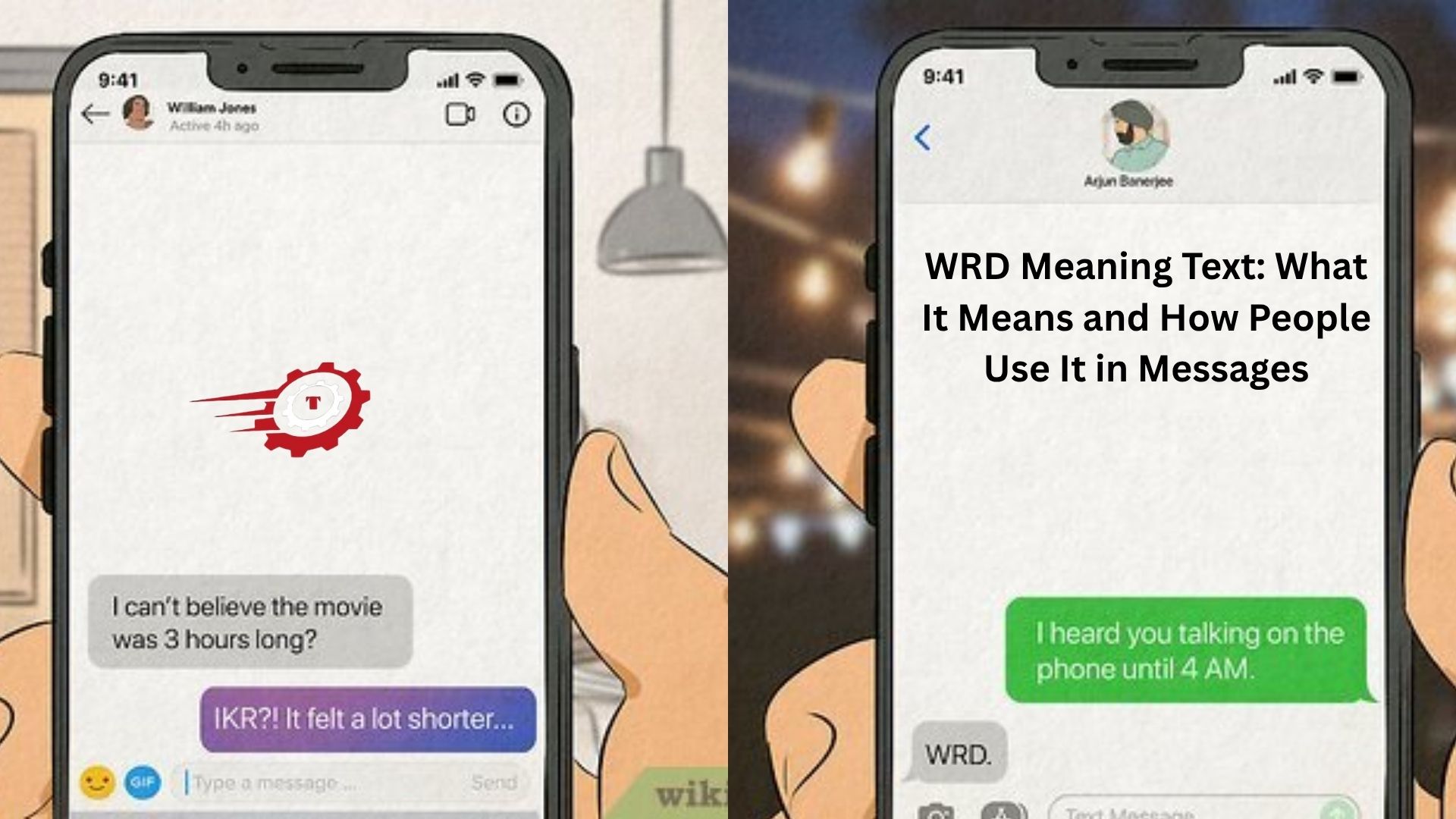
Texting has created its own language.
A few years ago, people mostly typed complete words and sentences. Today, a single abbreviation can carry an entire conversation. One of those abbreviations is WRD.
If you’ve received a message that simply says “wrd,” you might have paused for a second and wondered what the sender actually meant. Was it a typo? A shortcut? Some new slang everyone else seems to understand?
The good news is that WRD isn’t complicated. Once you know how it’s used, you’ll start spotting it everywhere in texts, group chats, social media comments, and direct messages.
Table of Contents
- What Does WRD Mean in Text?
- The Most Common Meaning of WRD
- Why People Use WRD Instead of Writing “Word”
- Different Ways WRD Is Used in Conversations
- WRD on Social Media
- Examples of WRD in Text Messages
- Is WRD Positive or Negative?
- WRD vs Other Similar Slang Terms
- When You Should Use WRD
- Common Misunderstandings About WRD
- The Evolution of Short Text Slang
- Final Thoughts
What Does WRD Mean in Text?
In texting, WRD usually means “word.”
The abbreviation removes the vowel and leaves only the essential letters. That’s common in modern texting culture, where people often shorten words to type faster.
When someone sends “wrd,” they’re typically expressing agreement, understanding, acknowledgment, or approval.
Think of it as a casual way of saying:
- I agree
- That’s true
- Got it
- Makes sense
- Okay
- Exactly
The actual meaning depends on the conversation around it.
A single three-letter response can carry different emotions depending on the context.
The Most Common Meaning of WRD
Most of the time, WRD is simply another way of saying “word.”
The slang term “word” has been around for decades. It became popular in urban culture and hip-hop communities before spreading into everyday conversation.
When someone says “word,” they’re often confirming that they understand or agree with something.
For example:
Friend: “The traffic was terrible today.”
You: “Wrd.”
In that situation, WRD means something close to “I hear you” or “That’s true.”
It’s short, casual, and easy to send.
That’s a big reason why it has remained popular.
Why People Use WRD Instead of Writing “Word”
Let’s be honest.
Texting habits are built around convenience.
People constantly look for faster ways to communicate. That’s why abbreviations like LOL, BRB, IMO, and IDK became part of everyday language.
WRD follows the same pattern.
Removing vowels is common in online communication. You’ll often see examples like:
- PLS instead of please
- THX instead of thanks
- MSG instead of message
- WRD instead of word
The meaning stays the same, but typing becomes slightly quicker.
While saving one letter may not seem important, slang often spreads because it feels natural within certain communities and online spaces.
Sometimes people use WRD simply because it looks cooler and more modern than typing the full word.
Different Ways WRD Is Used in Conversations
Here’s where things get interesting.
WRD isn’t limited to one exact meaning.
Depending on the situation, it can serve several purposes.
Showing Agreement
This is probably the most common use.
Person A: “That movie was way better than I expected.”
Person B: “Wrd.”
The response signals agreement without needing a long explanation.
Acknowledging Information
Sometimes WRD means “I understand.”
Friend: “I’m running about 20 minutes late.”
You: “Wrd.”
You’re confirming that you’ve received the message.
Expressing Surprise
In some conversations, WRD acts more like a reaction.
Friend: “I got front-row concert tickets.”
You: “Wrd?!”
Adding punctuation changes the tone dramatically.
Now it sounds surprised rather than simply agreeable.
Encouraging Someone to Continue
Occasionally WRD can mean something like “really?” or “tell me more.”
Friend: “I met a celebrity yesterday.”
You: “Wrd?”
The question mark invites more details.
Context matters a lot.
The exact same abbreviation can communicate several different things.
WRD on Social Media
WRD isn’t limited to text messages.
You’ll see it across platforms like:
- X (formerly Twitter)
- TikTok
- Snapchat
- Discord
People often use it in comment sections when they strongly agree with a post.
Imagine someone posts:
“College textbooks cost way too much.”
A comment saying “wrd” immediately signals agreement.
No lengthy explanation needed.
Social media rewards quick reactions, which is one reason abbreviations thrive there.
The shorter the response, the easier it is to engage.
Examples of WRD in Text Messages
Real-world examples make slang easier to understand.
Here are a few common situations.
Example 1
Friend: “This week feels longer than usual.”
You: “Wrd.”
Translation: I completely agree.
Example 2
Friend: “The meeting got moved to Friday.”
You: “Wrd.”
Translation: Got it.
Example 3
Friend: “I won a free trip.”
You: “Wrd?!”
Translation: Seriously?
Example 4
Friend: “I might quit my job.”
You: “Wrd? What happened?”
Translation: Really? Tell me more.
Notice how punctuation changes the meaning.
That’s one of the subtle things many people overlook.
Is WRD Positive or Negative?
Most of the time, WRD is neutral to positive.
It’s generally not used as an insult or criticism.
Instead, it helps keep conversations moving smoothly.
That said, tone can change depending on how it’s used.
For example:
Person: “I guess nobody liked my presentation.”
Response: “Wrd.”
That could sound cold or dismissive if the situation calls for empathy.
Texting always carries a small risk of misunderstanding because people can’t hear your voice or see your facial expressions.
That’s why some users add emojis or extra words for clarity.
WRD vs Other Similar Slang Terms
WRD shares similarities with several popular texting expressions.
“Facts” is one example.
When someone says “facts,” they’re emphasizing strong agreement.
Friend: “Sleep is more important than scrolling social media.”
You: “Facts.”
WRD works in a similar way.
Another related term is “bet.”
In modern slang, “bet” often means okay, understood, or agreed.
You’ll also see responses like:
- True
- Exactly
- For real
- No cap
- Facts
- Bet
All of these can perform similar functions depending on the conversation.
The difference is mostly stylistic.
Different friend groups tend to prefer different expressions.
When You Should Use WRD
The safest place to use WRD is in casual conversations.
Texting friends.
Chatting in group messages.
Replying to social media posts.
Talking with people who already use internet slang.
For example:
Friend: “We’re meeting at 7.”
You: “Wrd.”
That feels completely natural.
On the other hand, WRD usually doesn’t belong in professional communication.
Imagine sending this to your manager:
Boss: “Please submit the report by noon.”
You: “Wrd.”
Technically it acknowledges the message, but it may come across as overly casual.
Work emails and professional messages generally call for more traditional language.
A simple “Got it” or “Will do” is usually a better choice.
Common Misunderstandings About WRD
One reason people search for the meaning of WRD is that abbreviations can look confusing at first glance.
Some readers assume it’s a typo.
Others think it stands for a longer phrase.
In most cases, though, WRD is simply shorthand for “word.”
Another misunderstanding involves age groups.
Many people assume only teenagers use slang like WRD.
That’s not really true anymore.
Internet culture spreads language across generations faster than ever.
You’ll find young adults, professionals, gamers, content creators, and everyday social media users using the same abbreviations.
Language online moves quickly.
What starts in one community often becomes mainstream surprisingly fast.
The Evolution of Short Text Slang
Text abbreviations aren’t new.
Back when text messages had character limits and phone keyboards were slower, shortening words made practical sense.
People created shortcuts like:
- LOL
- OMG
- BRB
- TTYL
Many of those abbreviations survived even after smartphones made typing easier.
Why?
Because language evolves around habits, not just necessity.
WRD follows that same path.
It began as a quick shorthand but stayed around because people enjoyed using it.
There’s also a social aspect.
Slang creates a sense of belonging.
When people use terms like WRD, they’re participating in a shared style of communication that feels familiar within certain groups.
That’s one reason internet slang rarely disappears completely.
Old terms fade, new ones emerge, and some stick around for years.
Final Thoughts
The meaning of WRD in text is usually simple: it’s a shortened version of “word,” used to express agreement, acknowledgment, understanding, or interest.
Despite being only three letters long, it can carry several meanings depending on context and punctuation. A plain “wrd” may mean “I agree,” while “wrd?” can mean “really?” and “wrd?!” can signal surprise.
The next time someone sends you WRD, you won’t need to guess what they’re saying. Just look at the conversation around it, and the meaning usually becomes clear.
Sometimes the smallest messages say the most. Three letters can be enough.
