

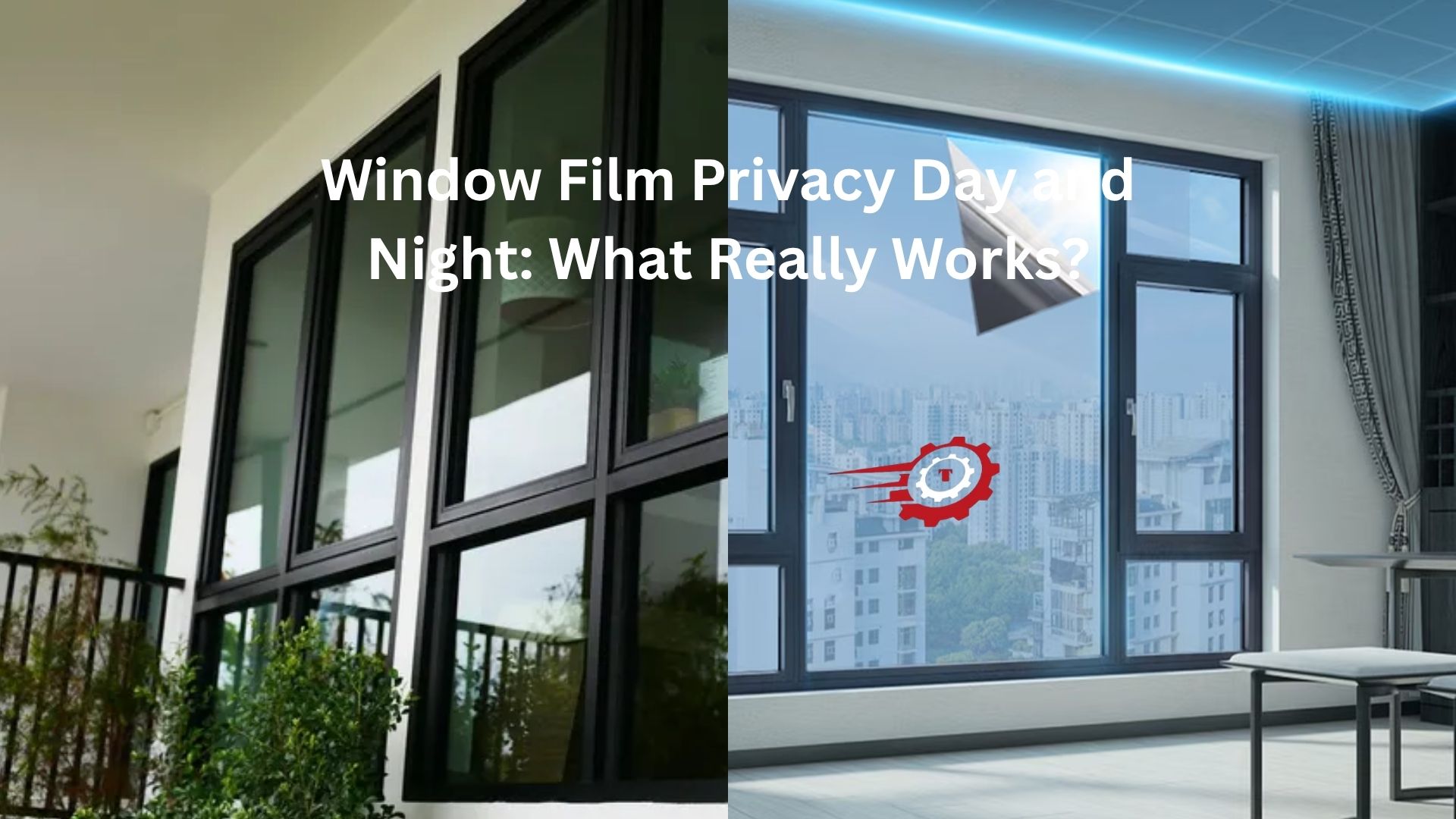
Privacy matters more than most people realize. You don’t think much about your windows until you notice a neighbor looking in, headlights shining through your living room at night, or people outside getting a clear view of your office.
That’s usually when window film starts looking like a smart solution.
The challenge is that many people assume all privacy window films work the same way. They don’t. Some offer excellent daytime privacy but become nearly useless after sunset. Others provide privacy around the clock but change how your windows look and feel.
If you’re trying to find window film privacy day and night, understanding the differences can save you money, frustration, and the disappointment of installing something that doesn’t meet your expectations.
Table of Contents
- Understanding How Privacy Window Film Works
- Why Daytime Privacy Is Easier Than Nighttime Privacy
- The Truth About Reflective Window Film
- Best Types of Window Film for Day and Night Privacy
- Frosted Window Film and 24-Hour Privacy
- Smart Film and Modern Privacy Solutions
- Choosing the Right Film for Different Rooms
- Common Mistakes People Make
- Is Window Film Worth It for Privacy?
- Final Thoughts
Understanding How Privacy Window Film Works
Most privacy films rely on a simple principle: controlling visibility through glass.
Sounds straightforward, but there’s a catch.
Visibility through a window is heavily influenced by light. The side with more light generally has the advantage when looking through the glass.
Imagine sitting inside your home on a sunny afternoon. Outside is bright, while the interior is relatively darker. People outside struggle to see in because the glass reflects much of the exterior light.
Now flip that situation.
At night, your living room lights are on while outside is dark. Suddenly, the inside becomes easier to see. That’s where many homeowners get surprised.
Window film can improve privacy, but light conditions still play a major role in how effective it remains throughout the day.
Why Daytime Privacy Is Easier Than Nighttime Privacy
Here’s the thing many advertisements don’t clearly explain.
Daytime privacy is relatively easy to achieve.
Reflective and mirrored window films work exceptionally well during daylight because sunlight creates a reflective surface. From outside, people mostly see reflections instead of what’s happening indoors.
You may have noticed this effect on office buildings with shiny windows. During the day, they almost look like mirrors.
Nighttime creates a completely different situation.
Let’s be honest. If your kitchen is brightly lit at 9 PM and the outside is dark, a standard reflective film won’t magically stop someone from seeing inside. The mirror effect largely disappears because the brighter side is now indoors.
That’s why people searching for window film privacy day and night often feel confused. Products marketed as privacy films may only provide privacy during certain lighting conditions.
The Truth About Reflective Window Film
Reflective window film remains one of the most popular choices for residential and commercial buildings.
There’s a good reason for that.
It reduces glare, cuts heat, helps with energy efficiency, and creates strong daytime privacy.
During the day, it works beautifully.
You can sit near your front window, enjoy the outside view, and feel comfortable knowing people passing by can’t easily see inside.
At night, however, expectations need to be realistic.
If indoor lights are brighter than outdoor lighting, reflective films lose much of their privacy benefit. People outside may still see silhouettes, movement, furniture, and even detailed interior views depending on the lighting balance.
That doesn’t make reflective film bad.
It simply means it’s designed primarily for daytime privacy rather than true 24-hour privacy.
Understanding this distinction helps avoid disappointment later.
Best Types of Window Film for Day and Night Privacy
If round-the-clock privacy is the goal, you’ll need to look beyond standard reflective options.
Several alternatives provide better results.
Frosted Privacy Film
Frosted films are among the most effective solutions for continuous privacy.
Instead of relying on reflection, they obscure visibility by scattering light.
Think about the glass used in many bathroom windows. Light passes through, but people can’t clearly see shapes, faces, or activities on the other side.
That effect remains consistent during both day and night.
A frosted film doesn’t care whether it’s sunny outside or dark outside. Privacy stays relatively constant because the film physically blocks clear viewing.
The trade-off is obvious.
You lose the clear outdoor view.
For bathrooms, entryways, conference rooms, and certain office spaces, that’s usually not a problem.
For living rooms with a beautiful backyard view, it may be less appealing.
Decorative Privacy Films
Decorative films offer a similar benefit.
These films come with etched, patterned, textured, or artistic designs that obscure visibility while allowing light to enter.
Some homeowners prefer decorative options because they add character instead of simply covering the glass.
A patterned film on a front door sidelight, for example, can create privacy while enhancing the home’s appearance.
Blackout Films
For maximum privacy, blackout films are difficult to beat.
Nobody sees through them because they completely block visibility.
Of course, they also block natural light.
Most people reserve blackout films for storage rooms, equipment areas, or specific commercial applications rather than everyday living spaces.
Frosted Window Film and 24-Hour Privacy
Among all traditional window film options, frosted film often strikes the best balance.
It offers something many homeowners want:
Privacy without making rooms feel dark.
Natural light still enters the space. Rooms remain bright and inviting. Yet people on either side of the glass can’t see clear details.
A simple example helps illustrate this.
Imagine a bathroom facing a neighboring property. Without privacy film, closing blinds becomes necessary. With frosted film, sunlight enters throughout the day while maintaining privacy around the clock.
The same idea works well for home offices.
Many remote workers appreciate natural daylight but don’t necessarily want neighbors watching them sit through video meetings all day.
Frosted film solves that problem nicely.
Smart Film and Modern Privacy Solutions
Technology has introduced another interesting option.
Smart privacy film can switch between transparent and opaque states.
With the press of a button or activation of a switch, glass changes from clear to private.
It’s impressive to watch.
Many modern conference rooms use this technology instead of traditional blinds or curtains.
The biggest limitation is cost.
Smart film remains significantly more expensive than standard privacy films. Installation can also be more involved because electrical components are usually required.
For high-end residential projects and modern commercial spaces, though, it offers a unique combination of flexibility and privacy.
When activated, privacy works equally well during the day and at night.
Choosing the Right Film for Different Rooms
Not every room needs the same level of privacy.
That’s why the best choice often depends on location.
Living rooms frequently benefit from reflective film because homeowners still want outdoor views and natural daylight.
Bathrooms almost always perform better with frosted privacy film.
Home offices can go either way depending on whether preserving outside visibility matters.
Front door glass panels often work beautifully with decorative frosted designs that maintain elegance while preventing direct visibility.
A small adjustment in one area can make a surprising difference.
Many homeowners start with a single bathroom or front entrance and later decide to install privacy film throughout other parts of the house.
Once you’ve experienced the comfort of additional privacy, it’s easy to understand the appeal.
Common Mistakes People Make
One mistake stands above the rest.
People assume “privacy film” automatically means complete privacy at all times.
That’s rarely true.
Another common issue involves focusing only on daytime performance. A film might look fantastic during installation when sunlight is bright, but nighttime behavior tells a different story.
Reading product descriptions carefully helps.
Manufacturers often specify whether privacy is daytime-only or suitable for continuous privacy.
Lighting inside the home matters too.
Even with privacy film, extremely bright indoor lighting can sometimes create visibility challenges depending on the product selected.
Testing light conditions before making a final purchase is always a smart move.
Professional installers can often demonstrate real-world performance using samples on actual windows.
Is Window Film Worth It for Privacy?
For many homes and businesses, absolutely.
Privacy film provides a cleaner look than constantly closed blinds or heavy curtains.
Natural light remains available.
Rooms often feel more open and welcoming.
Beyond privacy, many films offer additional benefits such as UV protection, glare reduction, and heat control.
The key is choosing the right product for your specific needs.
Someone wanting daytime privacy and energy savings may love reflective film.
A homeowner needing true day-and-night privacy will likely be happier with frosted or decorative privacy film.
There’s no universal answer because every space has different priorities.
Understanding those priorities first usually leads to the best outcome.
Final Thoughts
Finding the right window film privacy day and night solution starts with understanding a simple truth: not all privacy films work the same way after sunset.
Reflective films excel during the day but often lose effectiveness at night when interior lights dominate. Frosted and decorative films provide more consistent privacy regardless of lighting conditions, while smart films offer advanced control for those willing to invest more.
The best choice depends on how you use the space, how much natural light you want, and whether maintaining an outside view matters to you.
Get those factors right, and window film can transform a room from exposed and uncomfortable to private, bright, and far more enjoyable every day of the year.
