

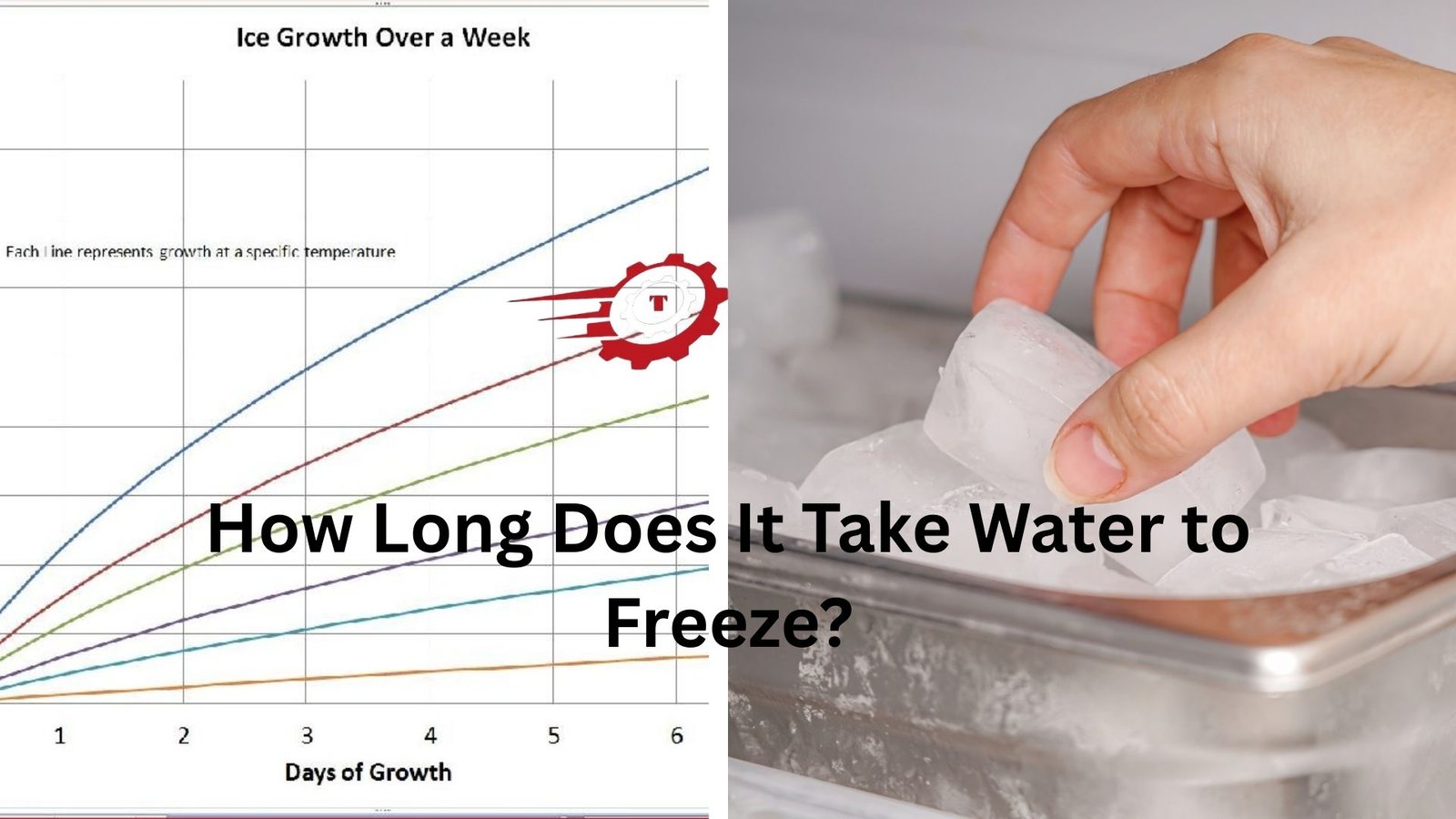
Water freezing sounds simple. Put it in the freezer and wait. But the real answer to how long it takes water to freeze is more interesting than people expect.
Sometimes it freezes in an hour. Sometimes it takes four. In rare situations it can even freeze almost instantly. The difference depends on things most people never think about—container size, freezer temperature, water purity, and even how still the water is.
If you’ve ever checked an ice tray too early and found slushy disappointment, you already know freezing isn’t always predictable.
Let’s break down what’s really happening when water turns into ice and how long you should actually expect it to take.
The Short Answer: Usually 3 to 4 Hours
In a typical home freezer set to 0°F (-18°C), a standard ice cube tray usually freezes in about 3 to 4 hours.
That’s the everyday benchmark most people experience.
Fill a tray with tap water, slide it onto the freezer shelf, come back after dinner, and you’ll probably have solid cubes.
But that timeline assumes a few normal conditions:
- Average ice cube tray size
- Standard freezer temperature
- Still water
- Not overfilled
Change any of those things and the freezing time shifts. Sometimes by a lot.
For example, shallow cubes freeze quicker. Deep molds take longer. And if your freezer is packed with food, air circulation slows down the process.
So while 3–4 hours is the common answer, the real range is wider.
Why Water Doesn’t Freeze Instantly
You might assume water freezes the moment it hits 32°F (0°C). Technically that’s the freezing point.
Reality is a little messier.
Water has to lose heat energy before the molecules can lock into a solid structure. That energy transfer takes time. The freezer removes heat from the water gradually through the container and the surrounding cold air.
Think of it like cooling a hot cup of coffee.
Even if the room is cold, the drink doesn’t drop to room temperature instantly. It slowly releases heat.
Freezing works the same way.
Water must first cool down from its starting temperature to 32°F, and only then can the actual freezing process begin. After that point, it still needs time for the entire volume to solidify.
The center is always the last part to freeze.
That’s why ice cubes sometimes look frozen on the outside but still have a soft center when you crack them open too early.
The Temperature of Your Freezer Matters More Than You Think
A lot of people assume their freezer is at the standard temperature. Many aren’t.
Some run closer to 10°F (-12°C) if they’re packed full or set incorrectly. At that temperature, freezing slows down significantly.
Here’s a rough comparison:
- 0°F freezer: ice cubes freeze in about 3–4 hours
- 10°F freezer: closer to 5–6 hours
- Commercial deep freezer (-10°F or lower): sometimes under 2 hours
Restaurants and bars often rely on powerful freezers for this reason. Fast ice production matters when drinks are constantly being served.
At home, though, the freezer tends to open frequently. Warm air enters every time someone grabs ice cream or frozen pizza.
That constant temperature swing adds extra time.
Container Size Changes Everything
One of the biggest factors is how much water you’re trying to freeze.
Small volumes freeze quickly. Larger ones take patience.
Picture three different situations.
First, a normal ice cube tray. Those small pockets allow cold air to surround the water from multiple sides. Freezing happens fairly evenly.
Now imagine a large plastic container full of water. Maybe you’re freezing soup or making a block of ice for a cooler. The outer layer freezes first while the center stays liquid for much longer.
A thick block can take 12 to 24 hours to freeze solid.
The same idea applies to water bottles.
A half-full bottle might freeze overnight. A completely full one could take longer, especially if the plastic insulates the water slightly.
Starting Temperature Makes a Difference
Here’s something people overlook: the starting temperature of the water.
Cold tap water obviously freezes faster than warm water. That part seems obvious.
But there’s an interesting twist.
Under certain conditions, hot water can freeze faster than cold water. This strange phenomenon is known as the Mpemba effect.
Scientists still debate the exact cause, but several theories exist:
- Hot water evaporates slightly, reducing volume
- It may contain fewer dissolved gases
- Temperature gradients inside the container change heat transfer
In everyday kitchen situations, though, the effect isn’t guaranteed. Most of the time, cooler water still wins.
If you’re trying to make ice quickly, starting with cold tap water usually helps.
Why Ice Cubes Freeze from the Top Down
Take a close look at an ice cube tray after it freezes.
You’ll often notice the top surface looks cloudy while the bottom stays clearer. Sometimes there’s even a hollow spot in the center.
That happens because freezing typically starts at the top surface where the water contacts cold air.
As ice forms, the remaining liquid water underneath gets pushed toward the center. Dissolved minerals and air bubbles get trapped there.
That’s why perfectly clear ice is actually harder to make than regular cloudy ice. Specialty ice makers freeze water slowly from one direction to push impurities away.
Most home freezers just freeze everything unevenly.
The result is the familiar cloudy cube you drop into a drink.
Still Water Freezes Faster Than Moving Water
Movement slows freezing.
You see this clearly in nature. Lakes freeze on the surface in winter, but rivers stay liquid longer because flowing water constantly mixes warmer layers.
The same concept applies inside a freezer.
If the water sits completely still, heat escapes more efficiently. But if it’s shaken, stirred, or moved around, warmer molecules redistribute and delay freezing.
Of course, once a tray is in the freezer it usually stays still. But airflow inside the freezer can still affect the rate slightly.
Better airflow equals faster freezing.
That’s why ice trays freeze faster when they’re not crammed between bags of frozen vegetables.
Altitude and Water Purity Also Play a Role
These factors are smaller but still interesting.
At higher altitudes, the boiling point of water drops, but the freezing point stays almost the same. However, slight pressure differences can still influence freezing behavior in subtle ways.
Water purity matters more.
Pure distilled water can sometimes supercool, meaning it drops below freezing temperature without forming ice.
Then something triggers crystallization—like tapping the container—and the water freezes almost instantly.
It’s one of those science experiments that feels a little magical when you see it happen.
Tap water usually contains enough minerals and particles to prevent dramatic supercooling, so most people never notice this effect at home.
Real-Life Freezing Times for Common Situations
Let’s bring this back to everyday experience.
A few common examples make the timing clearer.
Fill an ice cube tray with tap water and place it in a normal freezer. Expect around 3 to 4 hours before the cubes are solid.
Freeze a water bottle for a road trip cooler. That usually takes 6 to 8 hours, sometimes overnight.
Pour water into a large bowl or container to make a solid ice block. That might require 12 to 24 hours depending on thickness.
Leave a shallow pan of water in the freezer. It could freeze in 1 to 2 hours because the surface area is large.
Same substance. Very different times.
The size and shape of the water matter just as much as temperature.
Tricks to Freeze Water Faster
Sometimes you actually need ice quickly.
Maybe guests are coming over, or you suddenly realize the cooler needs ice before a trip.
A few small adjustments help speed things up.
Use metal ice trays instead of thick plastic when possible. Metal transfers heat faster.
Spread containers apart so cold air can circulate.
Avoid placing trays directly on top of frozen food piles.
And keep the freezer door closed as much as possible while freezing happens.
One more practical trick: use smaller molds. Smaller cubes freeze dramatically faster than large decorative cocktail cubes.
That’s why bars often prepare big cubes hours in advance.
When Water Freezes Almost Instantly
There’s one fascinating exception to the usual freezing timeline.
Supercooled water.
If extremely pure water sits undisturbed below 32°F without forming ice crystals, it can remain liquid. But the moment something disturbs it—like tapping the bottle—the freezing process begins instantly.
You can watch ice spread through the bottle like a fast-moving crystal wave.
It looks like a science trick, but it’s real physics.
This usually happens with purified bottled water that’s been cooled very carefully in a freezer without movement.
Not common in daily life. But very cool when it happens.
The Bottom Line
For most everyday situations, water placed in a home freezer takes about 3 to 4 hours to freeze into ice cubes.
But freezing isn’t a single fixed timeline.
The size of the container, freezer temperature, starting water temperature, airflow, and even water purity all influence how quickly the transformation happens.
Small amounts freeze fast. Large blocks take patience.
So the next time you check an ice tray too early and find it half frozen, it’s not your freezer being stubborn. It’s just physics doing its thing—slowly pulling heat out of water until the molecules finally lock into solid ice.
