

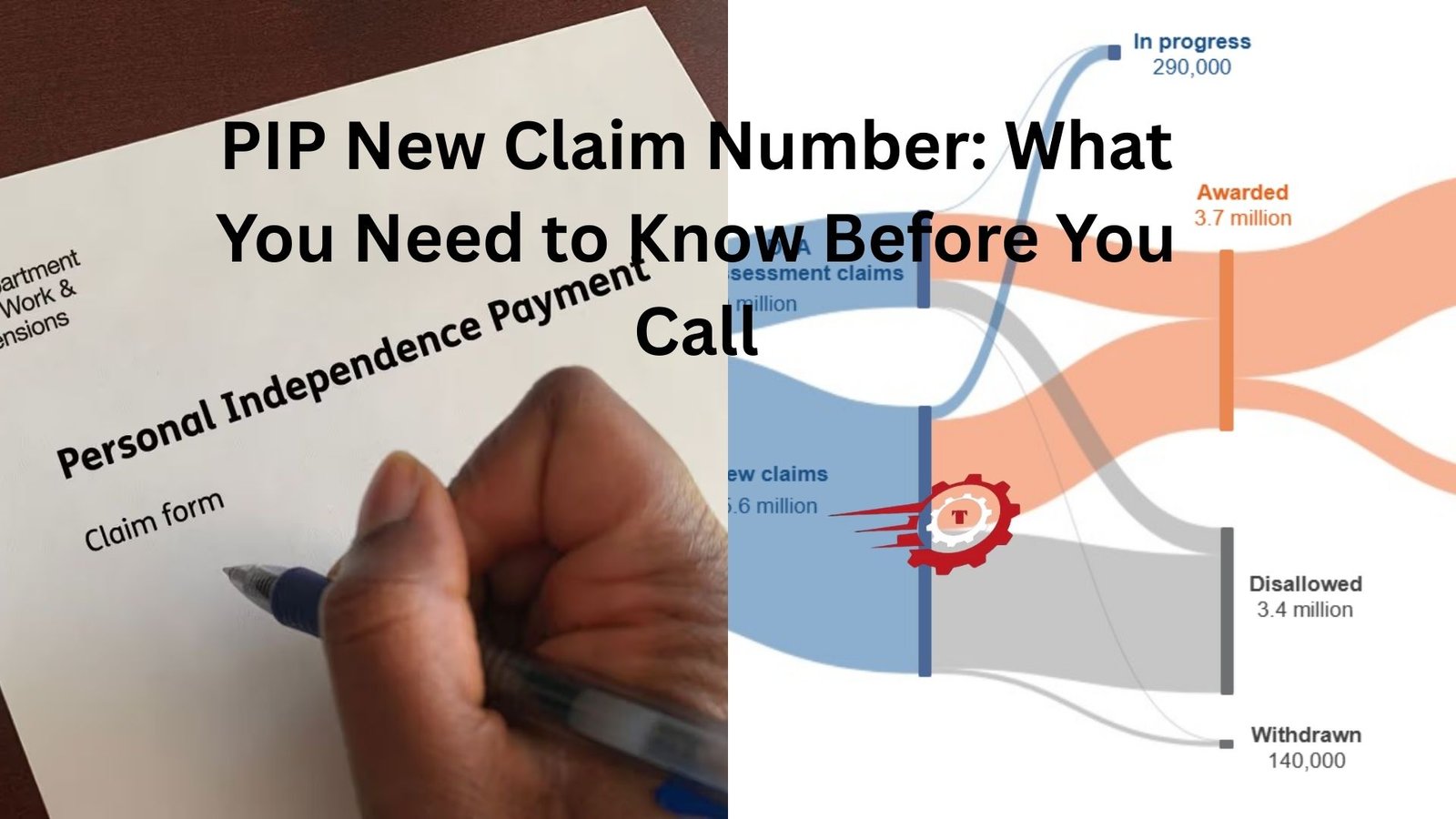
If you’re thinking about starting a Personal Independence Payment claim, the very first step usually begins with a phone call. That’s where the PIP new claim number comes in.
It sounds simple. Just dial, answer a few questions, and you’re on your way.
In reality? It can feel overwhelming.
When you’re dealing with illness, disability, or a condition that’s slowly chipped away at your daily routine, even making that first call can feel like climbing a hill in the rain. So let’s slow it down and walk through what the PIP new claim number is, what actually happens when you call, and how to make the process a little less stressful.
What Is the PIP New Claim Number?
The PIP new claim number is the official phone line you call to start a brand-new claim for Personal Independence Payment in the UK.
It connects you to the Department for Work and Pensions (DWP). This is where your claim officially begins. No online shortcuts. No downloadable starter form. The phone call triggers everything.
When you call, you’re not doing the full application. You’re registering your intent to claim. Think of it as opening the door.
From that point, the DWP sends you the “How your disability affects you” form — the long one. That’s where the real detail comes in later.
But none of that happens until you make that first call.
Why That First Call Matters More Than People Think
Here’s something many people don’t realise.
The date you call the PIP new claim number can protect your payments.
If your claim is eventually approved, your payments are usually backdated to the date you made that first call — not the date you return the form, not the date of your assessment.
That’s a big deal.
Let’s say someone waits three months before picking up the phone because they’re unsure if they “qualify.” If they would have been eligible from the start, that’s three months of potential back pay lost.
I’ve seen people hesitate because they feel awkward about claiming. Or they think they’re “not disabled enough.” That internal debate can cost real money.
If you think you might qualify, it’s usually better to make the call and find out.
What Happens When You Call
Let’s take the mystery out of it.
When you ring the PIP new claim number, the call handler will ask for:
- Your full name
- Address
- Date of birth
- National Insurance number
- GP details
- Bank account details
- Information about time spent abroad, hospital stays, or care homes
It’s straightforward identity and background information. They won’t quiz you deeply about your condition at this stage.
The call usually takes around 15–20 minutes if you have everything ready.
Here’s a small tip that makes a difference: have your National Insurance number and bank details in front of you before you dial. Scrambling through drawers mid-call only adds stress.
And yes, you can have someone with you. If phone calls make you anxious, put the call on speaker. Ask a friend or relative to sit nearby. You’re allowed support.
If You Struggle on the Phone
Let’s be honest. Not everyone can manage phone calls easily.
If your condition affects your speech, hearing, memory, or anxiety levels, that first call can feel like a barrier in itself.
There are alternatives:
- Textphone services if you have hearing or speech difficulties
- Relay services
- Someone can call on your behalf, though you may need to confirm your details
If someone calls for you, the DWP might ask to speak to you briefly to confirm consent. It doesn’t have to be complicated.
I once knew someone with severe social anxiety who delayed calling for weeks. In the end, her sister sat next to her and did most of the talking while she confirmed identity questions. The relief afterwards was huge. Sometimes you just need that bit of backup.
The Form That Comes After
Once you’ve called the PIP new claim number, the DWP sends you the PIP2 form. That’s the part that really decides things.
This form asks how your condition affects daily living and mobility. Not your diagnosis. Not the name of your illness. It’s about impact.
Can you prepare food safely?
Can you wash and bathe without help?
Can you manage medication?
Can you travel independently?
This is where people often underplay their struggles.
We’re used to coping. Adapting. Minimising.
“I can cook,” someone might say.
But if they can only cook using a stool, need reminders to turn off the hob, and often burn themselves because of tremors, that’s not the same as cooking safely and reliably.
That detail matters.
Timing and Deadlines
After your call, you usually have one month to return the completed form.
Miss that deadline without a good reason, and your claim can close. That means starting over. Another call. Another wait.
If you genuinely need more time — maybe you’re waiting for medical letters or you’re unwell — you can ring and ask for an extension. Don’t just ignore the deadline.
It’s one of those admin tasks that feels small but has big consequences.
What If You’ve Claimed Before?
If you’ve had PIP in the past and your award ended, you’ll still need to call the PIP new claim number to start again.
There isn’t a shortcut system for most people.
And here’s the thing: if your condition has worsened, or you were previously refused but now have stronger evidence, it can absolutely be worth trying again.
Circumstances change. Evidence changes. Decision makers change.
A previous refusal isn’t a permanent verdict on your situation.
Common Worries Before Dialling
A lot of concerns come up around that first call.
“What if I say the wrong thing?”
You won’t. The initial call is factual and basic.
“What if they judge me?”
Call handlers are following a script to gather information. They aren’t assessing your eligibility.
“What if I don’t know all the details?”
If you’re unsure about something like dates of hospital stays, give your best estimate. You can clarify later if needed.
Sometimes the biggest barrier isn’t the system. It’s the anticipation.
Preparing Emotionally as Well as Practically
This might sound small, but it matters.
Choose a time of day when you feel at your best. If mornings are easier because fatigue hits later, call then. If pain is worse first thing, wait until you’re more comfortable.
Have water nearby. Sit somewhere quiet.
Tiny things make a difference.
I’ve seen people treat the call like an exam. It isn’t. It’s an administrative starting point.
You don’t need to prove your disability on that call. You’re simply opening a claim.
The Waiting Game After the Call
Once the form is returned, the process can take months.
There may be an assessment — either by phone, video, or in person. Then more waiting.
It’s frustrating. Especially when you’re already dealing with health challenges.
This is where keeping copies of everything helps. Photocopy your form. Keep notes of dates and times of calls. Write down who you spoke to.
Not because you expect something to go wrong, but because it gives you control.
And when your energy is limited, control over small things counts.
A Quick Reality Check
PIP isn’t about whether you’re working or not. It isn’t means-tested. It doesn’t look at your income or savings.
It looks at how your condition affects your daily life.
That’s important. Some people assume they won’t qualify because they have a job. That’s not how it works.
You can work full-time and still qualify if your condition meets the criteria.
The key question is about difficulty, reliability, and safety — not employment status.
Why People Put Off Calling
There’s a pattern I’ve noticed over the years.
People wait because:
They feel guilty.
They compare themselves to someone “worse.”
They don’t want to label themselves as disabled.
They’re exhausted and can’t face paperwork.
All understandable.
But here’s the thing. If your condition affects your daily life enough to consider PIP, then you’re exactly the kind of person the benefit exists for.
It’s not charity. It’s support designed to offset extra costs of living with a disability.
Heating. Transport. Equipment. Help around the house. It all adds up.
Small Practical Tips That Help
Before calling the PIP new claim number:
Write down your GP’s name and address.
Have your National Insurance number ready.
Make the call somewhere quiet.
Note the date and time you rang.
After the call:
Mark the form return deadline on your calendar.
Start jotting down examples of how your condition affects you — while it’s fresh in your mind.
You’d be surprised how quickly we forget the hard days when we’re having a slightly better one.
If the Outcome Isn’t What You Expected
Sometimes claims are refused. Or the award feels lower than it should be.
That doesn’t mean the end.
There’s a mandatory reconsideration stage. Then, if needed, an appeal. Many appeals succeed, especially when detailed evidence is provided.
But that’s further down the road.
Right now, the key step is simple: making the call.
The Takeaway
The PIP new claim number is just a phone line. That’s all.
But for many people, it represents something bigger — recognition, financial support, and a bit of breathing space.
The process isn’t perfect. It can feel slow and frustrating. Yet delaying that first call rarely makes things easier.
If you think you might be eligible, gather your details, choose a calm moment, and dial.
One phone call doesn’t solve everything.
