

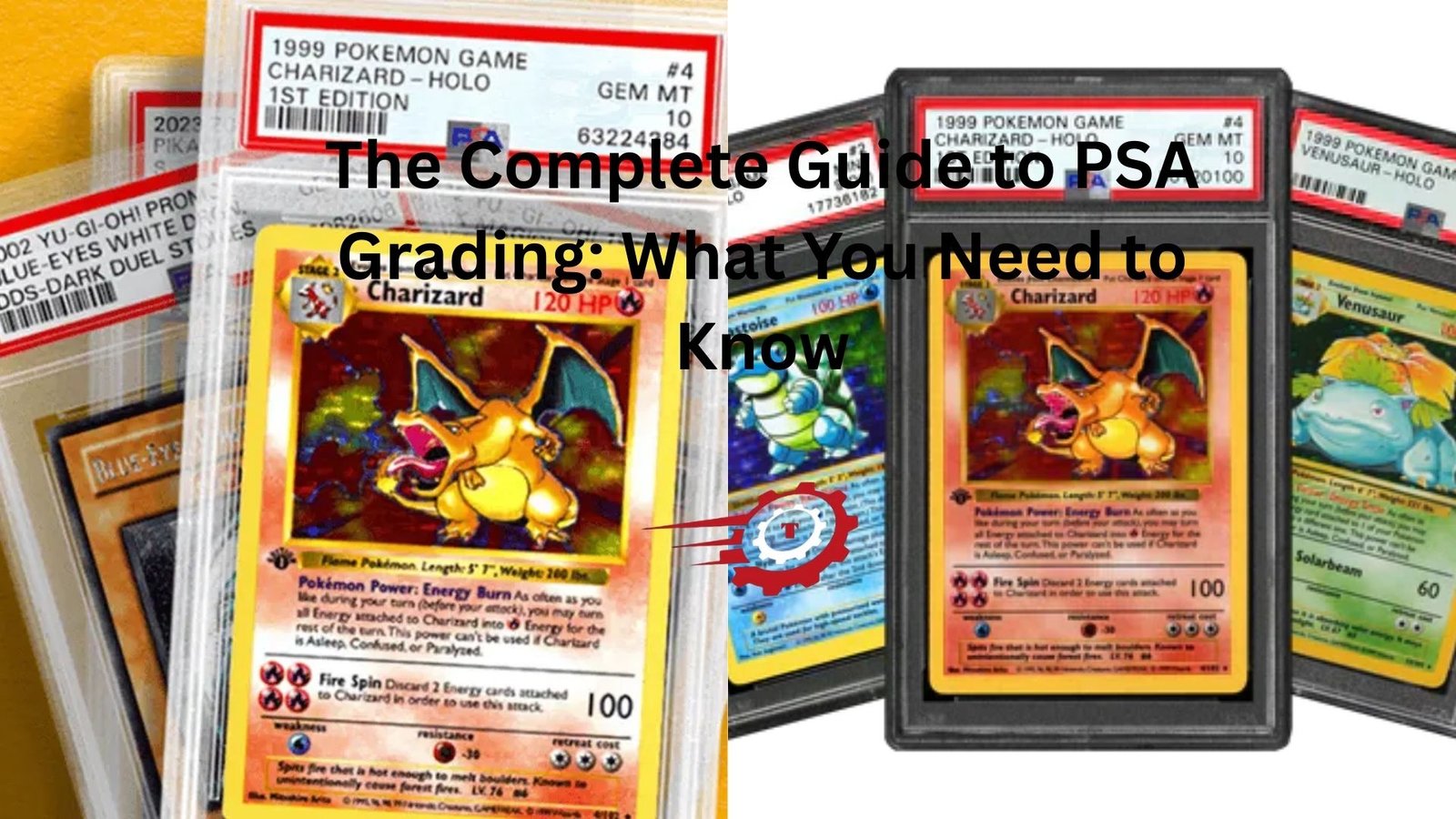
If you’re a sports card or trading card collector, you’ve probably heard the term PSA grading thrown around more times than you can count. But what exactly does it mean? Why is it important? And how can it impact the value of your cherished collection?
In this guide, we’ll break everything down in plain English. Whether you’re new to the hobby or looking to get serious about protecting and valuing your cards, this article will walk you through every step of the PSA card grading process.
What Is PSA Grading?
Let’s start simple. PSA grading stands for Professional Sports Authenticator grading. It’s a service that evaluates and certifies the condition of collectible cards, like:
- Sports cards (baseball, basketball, football, etc.)
- Trading card game cards (Pokémon, Magic: The Gathering, Yu-Gi-Oh)
- Other collectible cards
Once evaluated, each card is assigned a grade from 1 to 10, with 10 being Gem Mint — the highest possible score. The better the grade, the more valuable the card.
Think of it like getting your car inspected. You may think your vintage Corvette is in great condition, but until a professional takes a close look, you won’t know for sure — and neither will anyone else who might want to buy it.
Why Is PSA Grading Important?
There are three major reasons collectors use PSA card grading:
- Authenticity – It proves your card is the real deal.
- Condition – It gives an expert’s opinion on the card’s state.
- Value – A graded card can be worth significantly more than a raw one.
Here’s an anecdote:
A friend of mine found an old 1999 Pokémon Charizard card in his childhood collection. It was ungraded. He looked online and saw similar cards selling for $200. But he sent his in for PSA grading, and it came back as a PSA 9. Guess what? He sold it for $2,500. That’s the power of grading.
Understanding the PSA Grading Scale
The PSA grading scale ranges from 1 to 10. Here’s a quick breakdown:
| Grade | Condition | Description |
|---|---|---|
| PSA 10 | Gem Mint | Virtually perfect. Sharp corners, perfect centering, no flaws. |
| PSA 9 | Mint | Near-perfect, but may have one tiny flaw. |
| PSA 8 | Near Mint-Mint | Slightly more noticeable issues like off-centering or light surface wear. |
| PSA 7 | Near Mint | Minor flaws, such as small edge wear or light scratches. |
| PSA 6 | Excellent-Mint | Noticeable wear, maybe on edges or corners. |
| PSA 5 | Excellent | Moderate wear but still in decent condition. |
| PSA 4 | Very Good-Excellent | More obvious signs of wear. |
| PSA 3 | Very Good | Well-worn but intact. |
| PSA 2 | Good | Heavy wear, creases, or surface issues. |
| PSA 1 | Poor | Major damage — creases, stains, tears. Not very collectible. |
So, the closer you are to PSA 10, the more valuable your card is likely to be.
Step-by-Step: How to Submit Cards for PSA Grading
Now that you understand what PSA grading is and why it matters, here’s a step-by-step guide to getting your cards graded:
Step 1: Evaluate Your Cards
Before sending anything in, take a close look. Use a magnifying glass or a jeweler’s loupe. Look for:
- Centering: Are borders even on all sides?
- Corners: Are they sharp or rounded?
- Edges: Any whitening or fraying?
- Surface: Any scratches, print lines, or dents?
If your card has visible flaws, it may not be worth grading. Save yourself the cost.
Step 2: Create a PSA Account
Visit PSAcard.com and create a free account. You’ll need this to submit cards.
Step 3: Choose a Grading Level
PSA offers different service levels based on card value and turnaround time. For example:
- Value Service: For cards under $499
- Express Service: For cards up to $2,499
- Super Express: For high-value cards
The faster the service, the more you pay.
Step 4: Fill Out the Submission Form
Once logged in:
- Click “Start Submission”
- Choose the type of grading (Regular or Crossover)
- Enter card details (year, brand, player name, etc.)
- Select service level
- Review total costs
Step 5: Prepare and Pack Your Cards
Use card savers (semi-rigid plastic holders) — not top loaders! PSA requires them.
Then:
- Place each card in a penny sleeve, then into a card saver
- Put the cards in order as per your submission form
- Pack securely with bubble wrap or foam
- Include the printed submission form
Step 6: Ship Your Cards to PSA
Use a reliable, tracked shipping service like FedEx or USPS Priority. Insurance is strongly recommended, especially for high-value cards.
Step 7: Wait for the Results
Turnaround times vary. It could take a few weeks or even months, depending on the service level and backlog.
Once your cards are graded, you’ll be notified by email. You can then log in to see the grades — and yes, it’s as nerve-wracking as opening a pack.
How Much Does PSA Grading Cost?
The price depends on:
- Declared value of your card
- Service level
- Membership tier (Collectors Club gets discounts)
As of now, here’s a rough guide:
| Service Level | Estimated Cost (Per Card) |
|---|---|
| Value (Bulk) | $19–$25 |
| Regular | $40 |
| Express | $75 |
| Super Express | $150 |
| Walk-Through | $600+ |
Pro tip: Bulk submission through a trusted PSA dealer can help you save money if you’re grading many cards.
What Affects PSA Grading?
There’s a bit of art and science behind how PSA grades. Key factors include:
- Centering: Most important. Off-center cards lose points fast.
- Corners: Sharp corners mean higher grades.
- Edges: Clean edges = better score.
- Surface: Watch for scratches, dents, or print defects.
Also, remember: Cleaning your card (gently wiping fingerprints) before submission is OK. But don’t alter it — PSA can detect “card doctoring” and will reject your card.
How to Check PSA Pop Report
Ever wondered how many PSA 10 copies of your card exist? That’s where the PSA Population Report comes in. You can search any card on PSA’s website to see how many were graded and what grades they received.
It’s an awesome tool for understanding rarity and market value.
PSA Grading vs Other Grading Companies
PSA isn’t the only game in town, but it’s the most trusted.
| Grading Company | Known For | Grading Scale |
|---|---|---|
| PSA | Market leader, resale value | 1 to 10 |
| BGS (Beckett) | Sub-grades for detail | 1 to 10 with subgrades |
| SGC | Fast turnaround | 1 to 10 |
| CGC | Popular with TCG cards | 1 to 10 |
If resale value is your goal, PSA still reigns supreme. A PSA 10 typically sells for more than a BGS 9.5 or SGC 10 of the same card.
Common Mistakes to Avoid When Submitting
- Submitting low-value cards — It’s not worth the grading fee.
- Using top loaders — PSA wants card savers.
- Ignoring condition — Pre-screen your cards.
- Incorrect declared value — Could delay processing.
- Forgetting insurance — Always protect your shipment.
Final Thoughts on PSA Grading
PSA grading can elevate your card collection, both in value and credibility. It takes time, patience, and some upfront cost — but the rewards can be huge.
Whether you’re grading a Michael Jordan rookie, a rare Charizard, or your favorite player’s autograph, grading gives your card a professional stamp of approval.
One collector once told me: “I don’t trust a raw card anymore — unless I pulled it myself.” And honestly, that’s the sentiment across much of the hobby world.
