

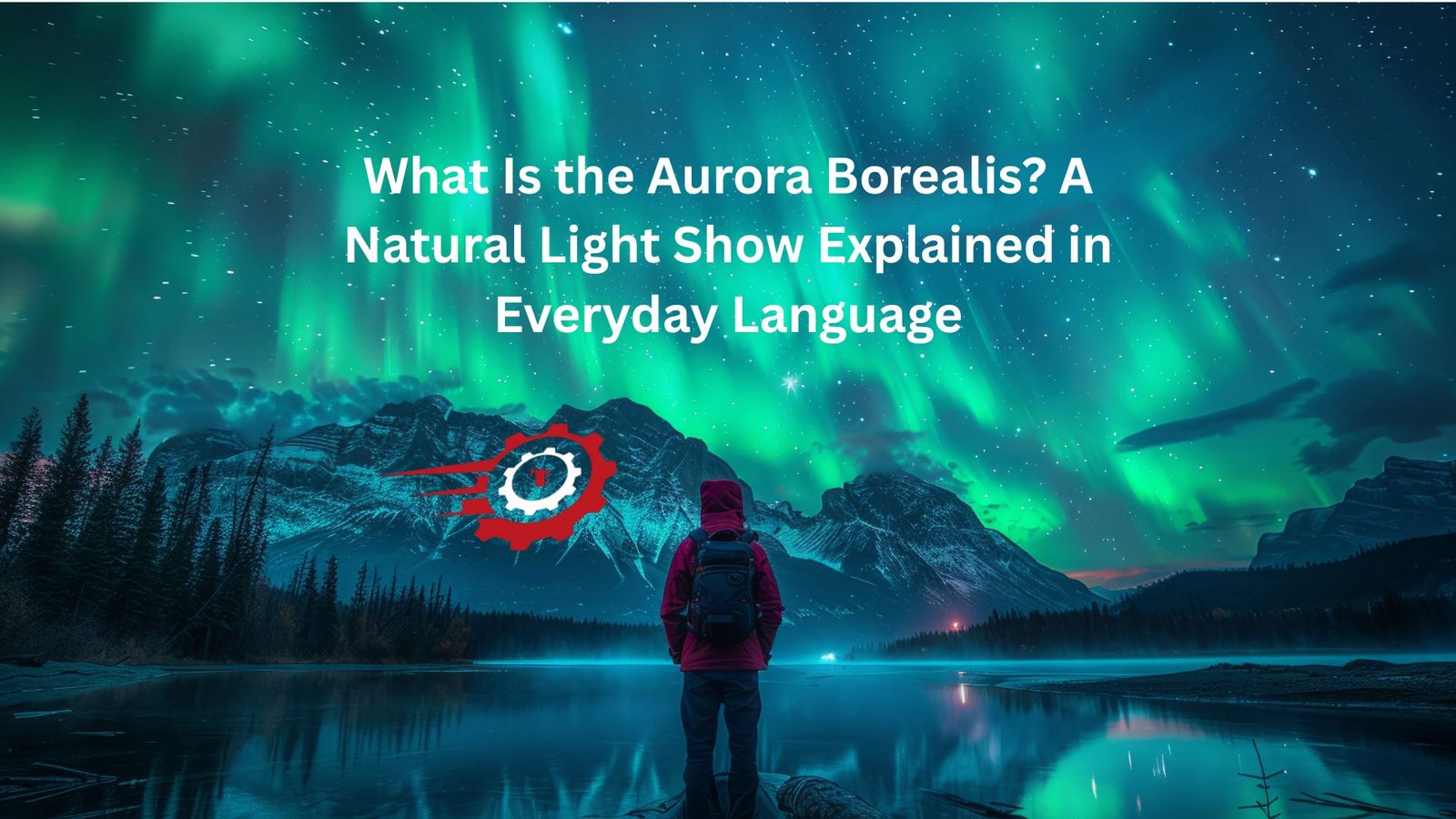
Have you ever looked up at the night sky and seen streaks of green, purple, or red dancing across it like magic? That’s the aurora borealis — one of nature’s most jaw-dropping displays.
But what is the aurora borealis really, and why does it happen?
In this easy-to-understand guide, we’ll break down the science behind it, answer questions like what time is the aurora borealis tonight, explore its vibrant colors, and even help you plan the best time and place to see it yourself.
What Is the Aurora Borealis? The Science Behind the Northern Lights
The aurora borealis, also known as the northern lights, is a glowing display of natural lights in the night sky, often seen in northern parts of the world. It looks like moving ribbons, waves, or curtains of green, purple, red, and blue light.
Simple Explanation
The aurora borealis occurs when charged particles from the sun collide with gases in Earth’s upper atmosphere, causing bursts of colorful light. These particles are carried by solar wind and are drawn to the Earth’s magnetic poles, where they interact with oxygen and nitrogen.
What Time Is the Aurora Borealis Tonight? How to Know When to Watch
Many people wonder, “what time is the aurora borealis tonight?” The answer depends on several factors, including location, solar activity, and weather conditions.
Best Time of Night to See It
The best hours to spot the northern lights are typically:
- 10 PM to 2 AM (local time), especially during winter months.
But it can sometimes appear earlier in the evening or later at night, depending on geomagnetic activity.
Tools to Check Tonight’s Forecast
To answer what time is the aurora borealis tonight, use these tools:
- Aurora Forecast by NOAA
- My Aurora Forecast App (Android/iOS)
- SpaceWeatherLive
Look for a KP index of 5 or higher for good visibility.
What Time Is the Aurora Borealis? General Patterns and Global Timings
If you’re not looking tonight specifically, but just wondering what time is the aurora borealis typically seen, here are some general insights:
Seasonal Timing
- Best months: September to March (in the Northern Hemisphere)
- Peak season: December to February (cold but darkest skies)
- Worst time: Summer months, due to long daylight hours near the poles
Time Zones Matter
The aurora borealis appears at different local times depending on where you are. For example:
- In Alaska, ideal viewing time might be 11 PM–2 AM.
- In Iceland, it could be 9 PM–1 AM.
Always adjust for your local time zone and check updated forecasts.
What Is the Best Time to See Aurora Borealis? Month-by-Month Breakdown
Let’s dig deeper into what is the best time to see aurora borealis, especially if you’re planning a trip.
Best Time of Year
The best time to see the northern lights is when:
- Nights are long and dark
- Skies are clear
- There’s high solar activity
Top Months:
- Late September to late March
- December to February offer the longest, darkest nights
Time of Night
- 10 PM to 2 AM is usually prime viewing time.
- On particularly active nights, you might see lights as early as 8 PM or as late as 4 AM.
Pro Tip
Stay for several days in a dark location. The aurora is unpredictable, so having multiple chances improves your odds.
What Color Is the Aurora Borealis? Why It Changes and What It Means
You may wonder, what color is the aurora borealis and why does it appear differently in various places or nights?
Most Common Aurora Colors
- Green – The most common color, caused by oxygen at lower altitudes.
- Red – Rare, but stunning. Caused by oxygen at higher altitudes.
- Blue/Purple – Less common. These colors are created when nitrogen molecules are involved.
- Pink or White – Often a mix of red and blue, seen in more intense shows.
The exact color depends on:
- The type of gas hit by solar particles
- The altitude of the interaction
- The energy level of the incoming particles
So next time you see the lights, you’ll know what color the aurora borealis is — and why!
Where to See the Aurora Borealis: Best Viewing Locations
The aurora borealis is strongest near the magnetic poles, so your best bet is to head north.
Top Places to See the Aurora
| Country | Best Locations |
|---|---|
| Norway | Tromsø, Lofoten Islands |
| Finland | Lapland, Rovaniemi |
| Iceland | Reykjavik, Thingvellir |
| Sweden | Abisko National Park |
| Canada | Yukon, Northwest Territories |
| USA (Alaska) | Fairbanks, Denali |
Go between September and March and aim for rural areas far from city lights.
How to Plan an Aurora Borealis Trip
Planning a trip to see the aurora borealis? Here’s how to make it a success.
Step-by-Step Trip Planner
- Choose the Right Season
Aim for mid-winter months like January or February. - Book a Dark Sky Location
Avoid cities. Look for cabins, wilderness lodges, or guided tours. - Stay at Least 4–5 Nights
The aurora isn’t guaranteed every night. More days = better chances. - Check the Forecast Daily
Use the apps or websites listed above. - Dress for Arctic Conditions
Bundle up! Think: insulated boots, thermal layers, face masks, and gloves. - Bring a Camera
Use manual settings, a tripod, and a wide lens. Set a slow shutter speed (e.g. 10–20 seconds) to capture the light.
Cultural Stories About the Aurora Borealis
The aurora borealis has fascinated humans for thousands of years. Here are some fascinating beliefs from around the world:
- Inuit cultures believed the lights were spirits of animals.
- Vikings thought they were reflections off the shields of Valkyries.
- Some Indigenous Canadian tribes said they were souls of ancestors dancing.
Even though we now understand the science, the aurora still feels like something more than just particles and light.
Quick Science Recap: What’s Really Going On?
If you like the technical stuff, here’s a short version of the science behind the aurora borealis:
- Charged particles from the sun hit Earth’s magnetic field.
- These particles are funneled toward the poles.
- They collide with oxygen and nitrogen in the atmosphere.
- The collisions release photons, or light.
- Depending on the gas and energy, different colors appear.
Aurora FAQ
Can I see the aurora borealis from my city?
If you live in the far north (like parts of Alaska, Canada, or Scandinavia), yes — if the sky is dark and clear. Otherwise, you’ll likely need to travel.
Can the aurora be predicted?
Not with certainty, but forecasts based on solar wind and geomagnetic activity are fairly reliable up to a few days ahead.
Does the moon affect aurora visibility?
Yes — a bright full moon can wash out weaker auroras. Try to go during a new moon for the best experience.
Final Thoughts: Why You Should See the Aurora at Least Once
The aurora borealis is more than just a scientific phenomenon. It’s an emotional, even spiritual, experience that reminds us how stunning and mysterious our world can be.
Whether you’re watching from a frozen lake in Finland or the open sky of Alaska, the moment those green waves ripple across the stars, you’ll never forget it.
