

It’s one of those questions that sounds simple until you actually try to answer it. Who owns Netflix? A single person? A tech giant? A shadowy group of investors?
Here’s the short answer: no one “owns” Netflix in the traditional sense. It’s a publicly traded company, which means millions of people technically own tiny pieces of it. But that doesn’t tell the full story—and honestly, it’s not the interesting part either.
What matters is who really controls Netflix, who makes the decisions, and how power is distributed behind the scenes. That’s where things get more human.
Netflix isn’t owned by one person—and that changes everything
Let’s start with the basics. Netflix is listed on the stock market under the ticker NFLX. Anyone can buy shares. That includes individual investors, big financial institutions, retirement funds, and even people casually investing through apps.
So if you own a few shares of Netflix, congratulations—you’re technically a part-owner.
But here’s the catch: owning shares doesn’t automatically mean having influence.
Imagine a massive stadium filled with shareholders. Some people are holding a handful of tickets. Others own entire sections. The people with the biggest sections? They’re the ones who actually matter when decisions are made.
That’s how ownership works here.
The biggest shareholders hold the real power
A large chunk of Netflix is owned by institutional investors. These are companies that manage huge amounts of money on behalf of others. Think names like:
- Vanguard Group
- BlackRock
- Fidelity
They don’t “run” Netflix day to day, but they have serious voting power. If Netflix wants to approve major changes, elect board members, or shift strategy, these institutions have a big say.
Picture this: Netflix proposes a major move—say, a new pricing structure or a risky expansion into gaming (which, by the way, they’ve already started exploring). The big shareholders vote. Their combined influence can steer the outcome.
Still, they’re not sitting in meetings writing scripts or deciding which shows get renewed. That’s someone else’s job.
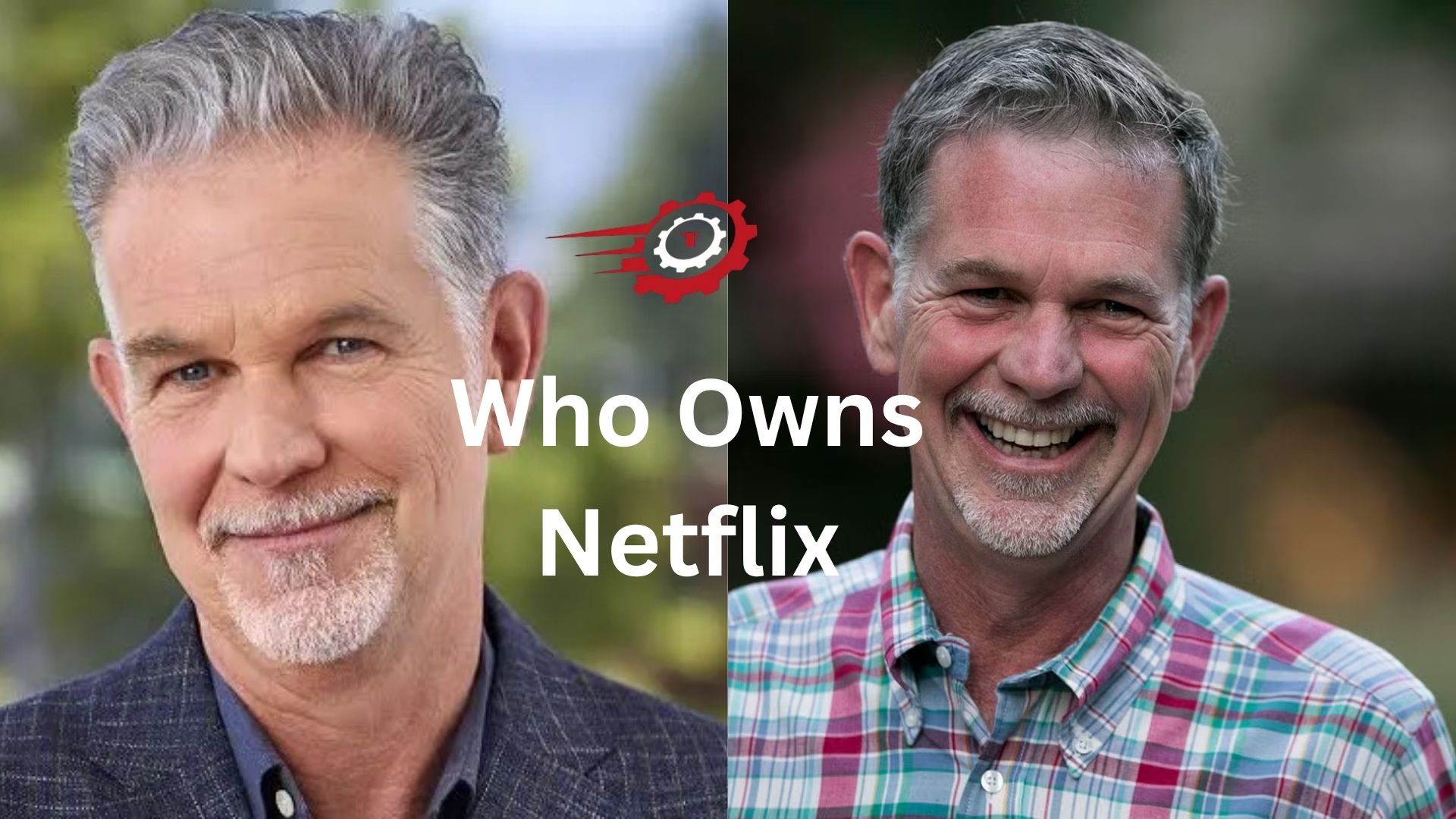
Reed Hastings: the face most people associate with Netflix
If you’ve followed Netflix even casually, you’ve probably heard the name Reed Hastings.
He co-founded Netflix back in 1997. At the time, it was a DVD rental service. You’d order movies online, and they’d show up in your mailbox. No late fees. That alone felt revolutionary.
Hastings was the public face of Netflix for years. He served as CEO and shaped the company’s direction—from mailing DVDs to becoming the world’s dominant streaming platform.
Even today, he still holds a meaningful stake in the company, though not enough to control it outright. What matters more is influence. Founders tend to carry weight that goes beyond percentages.
There’s a kind of trust that builds over time. When Hastings speaks, people listen—not just because of his shares, but because he built the thing from scratch.
The leadership shift: Netflix isn’t just “his” company anymore
Things changed in recent years.
Reed Hastings stepped down as co-CEO and transitioned into an executive chairman role. Now, the company is led by Ted Sarandos and Greg Peters.
Sarandos has been instrumental in Netflix’s content strategy. If you’ve ever binge-watched a Netflix original—Stranger Things, The Crown, Squid Game—his influence is all over it. He pushed Netflix to invest heavily in original content when that idea still seemed risky.
Greg Peters, on the other hand, comes from the product and technology side. He’s more focused on how the platform works, how it grows, and how it competes globally.
This split leadership reflects what Netflix has become. It’s not just a tech company. It’s not just a studio. It’s both—and balancing those worlds requires different strengths.
So who’s really in control?
Here’s the honest answer: control is shared.
No single person or company can unilaterally dictate Netflix’s direction. Instead, it’s a mix of:
- Executive leadership making daily decisions
- The board of directors overseeing strategy
- Major shareholders influencing big-picture moves
It’s a system that can feel a bit messy, but it’s also what allows Netflix to adapt quickly.
Think about how fast they pivoted from DVDs to streaming. Or how they doubled down on original content when competitors were still licensing shows. Those moves didn’t come from a rigid ownership structure. They came from a mix of leadership vision and shareholder support.
The board of directors: quiet but powerful
This is the part most people overlook.
Netflix has a board of directors—a group responsible for overseeing the company’s management and protecting shareholder interests. They don’t run daily operations, but they approve major decisions and can influence leadership changes.
If things go badly, the board can step in. If a strategy isn’t working, they can push for change.
You won’t see their names trending online, but behind closed doors, they matter a lot.
Why Netflix doesn’t have a “boss owner” like some companies
Compare Netflix to companies like Meta or Amazon.
Mark Zuckerberg has outsized control over Meta because of how its shares are structured. Jeff Bezos, while no longer CEO of Amazon, still holds significant influence due to his stake and legacy.
Netflix isn’t built that way.
It doesn’t have a dual-class share structure giving one person dominant voting power. That means no single individual can override everyone else. Decisions require alignment.
Let’s be honest—this has pros and cons.
On one hand, it prevents any one person from making reckless decisions unchecked. On the other, it can slow things down or create internal tension.
But in Netflix’s case, it’s helped create a culture that values experimentation and calculated risk.
A quick real-life scenario to make this clearer
Imagine you and a group of friends invest in a restaurant.
One friend started the business. Another handles the kitchen. Someone else manages finances. A few silent partners just put in money.
Now imagine the restaurant wants to expand to a new location. Who decides?
Not just the founder. Not just the investors. It’s a conversation—and sometimes a negotiation.
That’s basically Netflix.
Ownership vs. influence—don’t confuse the two
This is where people often get tripped up.
Ownership is about shares. Influence is about decision-making.
Reed Hastings doesn’t “own” Netflix in a controlling sense, but his voice still carries weight. Institutional investors own large portions, but they don’t pick which shows get greenlit.
Ted Sarandos might not be the largest shareholder, but when it comes to content, his influence is enormous.
So if you’re asking “who owns Netflix,” what you’re really asking is, “who shapes what Netflix becomes?”
And the answer is: a mix of people, each in different ways.
How this ownership structure affects what you watch
This isn’t just corporate trivia—it actually affects your daily life.
The shows you see, the subscription price you pay, even whether Netflix cracks down on password sharing… all of that ties back to how the company is owned and run.
For example:
When investors push for higher profits, Netflix might raise prices or introduce ads.
When leadership wants growth, they invest in international content or new features.
When both align, you get big swings—like massive budgets for original series.
It’s a balancing act between pleasing shareholders and keeping viewers happy.
Sometimes they nail it. Sometimes they don’t.
The global angle: Netflix belongs to the world, in a way
Here’s something interesting.
Because Netflix is publicly traded and widely held, its ownership is spread across the globe. Investors from different countries all hold pieces of it.
At the same time, its audience is global too.
That creates a feedback loop. Netflix isn’t just an American company anymore—it’s shaped by international tastes, markets, and expectations.
That’s why you see shows from South Korea, Spain, India, and beyond gaining massive popularity. It’s not just creative experimentation. It’s business strategy influenced by a global ownership and audience base.
So, who owns Netflix?
If you want a clean, one-line answer:
Netflix is owned by its shareholders, with major stakes held by institutional investors, while control is exercised by its executive leadership and board.
Not exactly catchy—but it’s accurate.
If you want a more human answer:
Netflix is run by people, influenced by money, and shaped by millions of viewers like you.
Final thought
It’s tempting to look for a single name behind something as big as Netflix. One person pulling the strings. One owner calling the shots.
But that’s not how it works here.
Netflix is more like a living system than a single-owner business. Founders, executives, investors, and audiences all play a role. Power shifts. Decisions evolve. The direction isn’t fixed—it’s negotiated over time.
And maybe that’s why Netflix feels the way it does. Sometimes bold. Sometimes confusing. Occasionally brilliant. Occasionally frustrating.
It’s not one person’s vision anymore.
It’s the result of many voices trying to steer the same ship.
