

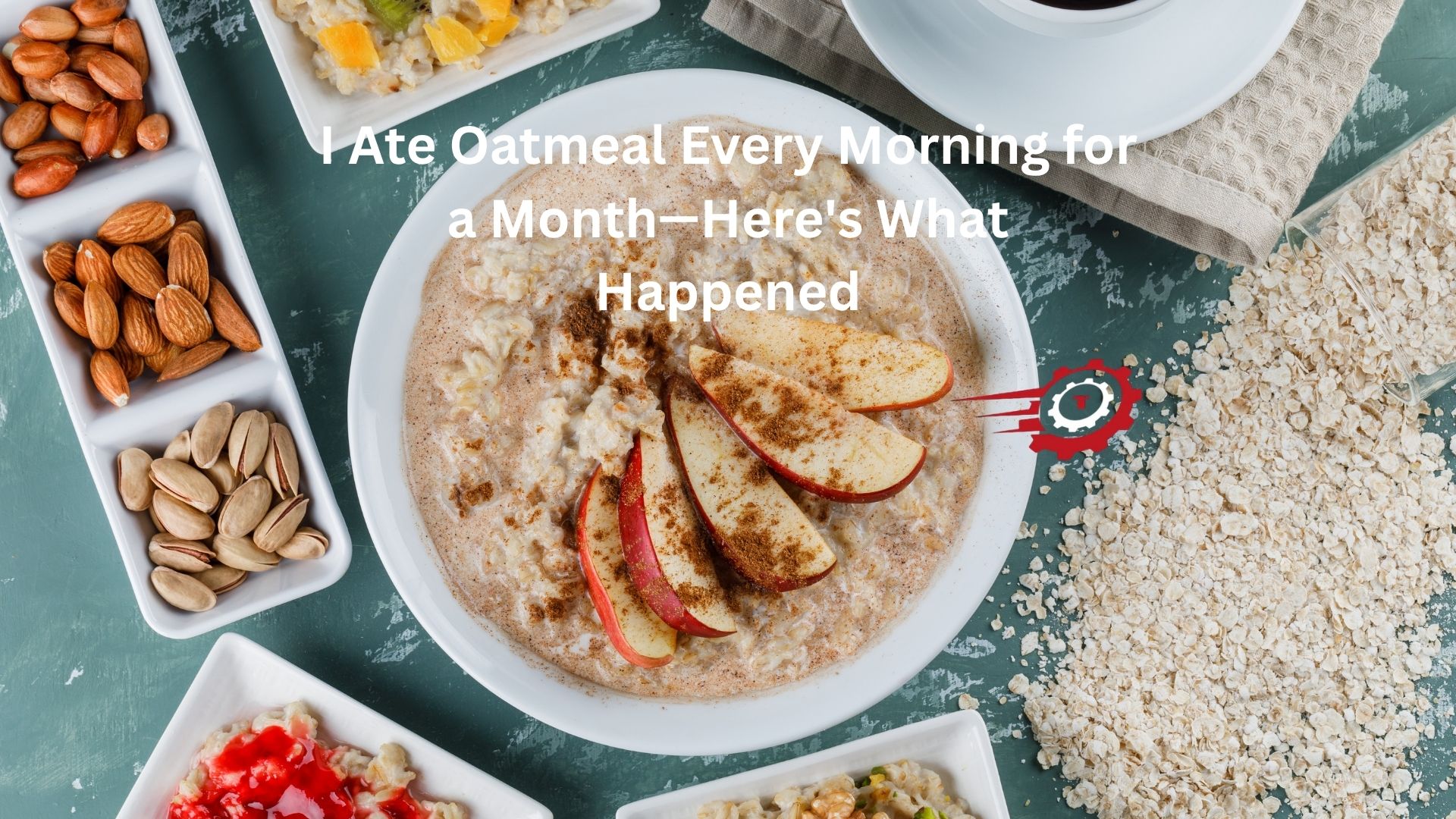
Breakfast habits can be surprisingly hard to change. Most of us bounce between skipping breakfast, grabbing something sugary on the way out the door, or eating whatever happens to be nearby.
A few months ago, I decided to simplify things.
Instead of overthinking breakfast every morning, I committed to eating oatmeal every single day for one month. No complicated rules. No dramatic fitness challenge. Just a bowl of oatmeal every morning and a little curiosity about what would happen.
At first, I expected almost nothing. Oatmeal seemed too ordinary to make a noticeable difference.
I was wrong.
Table of Contents
- Why I Chose Oatmeal
- The First Week Was Surprisingly Different
- Feeling Fuller for Longer
- Energy Levels Became More Consistent
- My Digestion Improved
- The Unexpected Effect on Snacking
- Not Every Day Was Perfect
- Different Ways I Kept Oatmeal Interesting
- What I Learned About Healthy Habits
- Would I Do It Again?
Why I Chose Oatmeal
There wasn’t a dramatic reason behind the experiment.
I simply wanted a breakfast that was affordable, easy to make, and reasonably healthy.
Oatmeal checked all three boxes.
A bag of oats costs very little compared to many breakfast foods. Preparation takes just a few minutes. Plus, oats contain fiber, which has long been associated with better digestion and longer-lasting fullness.
What appealed to me most was the simplicity.
Every morning, I knew exactly what breakfast would be. That removed one small decision from the day, and honestly, that felt refreshing.
Sometimes I topped it with bananas. Other days I added berries, cinnamon, or a spoonful of peanut butter. The base remained the same.
Just oats.
The First Week Was Surprisingly Different
The first few mornings felt normal.
By day three or four, though, I noticed something interesting.
I wasn’t thinking about food again an hour later.
Normally, I’d have breakfast and then find myself wandering into the kitchen looking for a snack before lunchtime. Sometimes it was a biscuit. Sometimes chips. Occasionally something healthier, but not always.
Oatmeal changed that pattern.
The combination of warm food and fiber seemed to stick with me longer than many breakfasts I’d eaten before.
One morning I had a large bowl around 7:30. Before starting this experiment, I would typically be hungry by 10:00.
That day, I looked at the clock and realized it was nearly noon.
It wasn’t a dramatic transformation. I wasn’t suddenly immune to hunger. I just felt satisfied for longer periods.
That’s a practical benefit many people can appreciate.
Feeling Fuller for Longer
One of the biggest changes throughout the month was satiety.
That’s a fancy word for feeling full and satisfied after eating.
Here’s the thing. Not all breakfasts are equal when it comes to keeping hunger away.
A sugary pastry might taste amazing at first. The problem is that the satisfaction often disappears quickly.
Oatmeal worked differently.
The fiber slowed things down. Instead of feeling a quick spike followed by a crash, breakfast seemed to carry me through most of the morning.
I noticed this most on busy workdays.
When meetings stacked up or deadlines piled on, I wasn’t constantly distracted by hunger. My attention stayed where it needed to be.
That alone made the experiment worthwhile.
Energy Levels Became More Consistent
I wasn’t expecting a huge difference in energy.
People often exaggerate these things online.
Still, after several weeks, I noticed fewer mid-morning slumps.
You know that feeling when your brain starts moving through mud around 10:30 a.m.?
That happened less often.
I wasn’t suddenly overflowing with energy. I wasn’t bouncing off the walls. The change was more subtle.
My mornings felt steadier.
Instead of riding a roller coaster of hunger and cravings, I felt more balanced. Some days were still better than others, of course. Life doesn’t magically become perfect because you eat oatmeal.
Yet the consistency stood out.
Even on hectic mornings, I had a reliable start.
My Digestion Improved
This was probably the most noticeable physical change.
Many people don’t pay much attention to digestion until something goes wrong.
During the month, things simply felt more regular.
Oats contain soluble fiber, which helps support healthy digestion. While everyone’s body responds differently, I personally noticed fewer digestive annoyances.
There was less bloating than usual.
Less discomfort after meals.
More consistency overall.
One weekend I traveled and skipped my usual oatmeal routine for two mornings. Oddly enough, I noticed the difference pretty quickly.
That was the moment I realized how much the habit had been helping.
Sometimes you only appreciate a positive change when it’s temporarily gone.
The Unexpected Effect on Snacking
I expected oatmeal to affect breakfast.
I didn’t expect it to influence the rest of my day.
Yet it did.
Because I stayed fuller during the morning, I naturally snacked less.
Not because I was trying to.
Not because I suddenly developed incredible willpower.
I simply wasn’t as hungry.
Think about a typical office setting. Someone brings doughnuts. Another person leaves candy in the break room. Snacks seem to appear everywhere.
Normally, it’s easy to grab something just because it’s there.
During the oatmeal month, I found myself walking past many of those temptations without much effort.
Again, this wasn’t perfection.
I still enjoyed treats.
The difference was that I was making a choice rather than responding to hunger.
That’s a meaningful distinction.
Not Every Day Was Perfect
Let’s be honest.
Eating the same breakfast every day can get boring.
There were mornings when oatmeal felt exciting and comforting.
There were also mornings when it felt like wallpaper.
Plain oatmeal, especially, can become repetitive.
A few weeks into the experiment, I understood why some people quit healthy eating routines. Not because the foods are bad, but because monotony slowly chips away at motivation.
That’s why variety became important.
Changing toppings helped a lot.
Adding fresh fruit one day and nuts the next made the experience more enjoyable without changing the foundation of the habit.
Another challenge involved social situations.
If friends invited me out for breakfast, oatmeal wasn’t always the most exciting menu choice.
Sometimes I adapted. Sometimes I made exceptions.
The goal wasn’t perfection. It was consistency.
Different Ways I Kept Oatmeal Interesting
A month is long enough to get creative.
Fortunately, oatmeal is surprisingly flexible.
Some mornings I mixed sliced bananas and cinnamon into the bowl. It tasted comforting and familiar.
Other days I added blueberries and a handful of almonds.
When I wanted something richer, peanut butter worked beautifully.
One particularly cold morning, I stirred in diced apples with cinnamon. The result felt more like dessert than breakfast.
These small changes mattered.
Without them, I doubt I would’ve stayed committed for the full month.
The lesson wasn’t really about oatmeal. It was about habits.
Healthy routines tend to last longer when they’re enjoyable.
What I Learned About Healthy Habits
The biggest takeaway had very little to do with oats.
The real lesson was that simple habits often create noticeable results.
People love searching for dramatic solutions.
A complicated diet.
A miracle supplement.
A revolutionary morning routine.
Meanwhile, small consistent actions quietly do most of the work.
Eating oatmeal every morning wasn’t exciting. Nobody would call it groundbreaking.
Yet after thirty days, I could clearly see benefits.
I felt fuller.
My energy was steadier.
Digestion improved.
Snacking decreased.
None of those changes happened overnight. They accumulated gradually.
That’s usually how sustainable health improvements work.
Small actions repeated often become surprisingly powerful.
Would I Do It Again?
Absolutely.
In fact, I never completely stopped.
After the experiment ended, oatmeal remained part of my breakfast rotation.
Not every day.
Sometimes I want eggs. Sometimes I prefer yogurt or something else entirely.
But oatmeal earned a permanent place in my kitchen.
It’s affordable, easy, filling, and adaptable.
Most importantly, it delivered real-world benefits that I could actually feel.
If you’re considering trying oatmeal every morning for a month, don’t expect a life-changing transformation after a few bowls.
Think of it as a simple experiment.
Pay attention to your hunger levels. Notice your energy throughout the morning. Observe how your body responds over time.
You might discover what I did: sometimes the most ordinary foods can have the most surprisingly positive impact.
A bowl of oatmeal doesn’t look like much. Yet over thirty mornings, it taught me that consistency often beats complexity—and that lesson may be more valuable than breakfast itself.
