

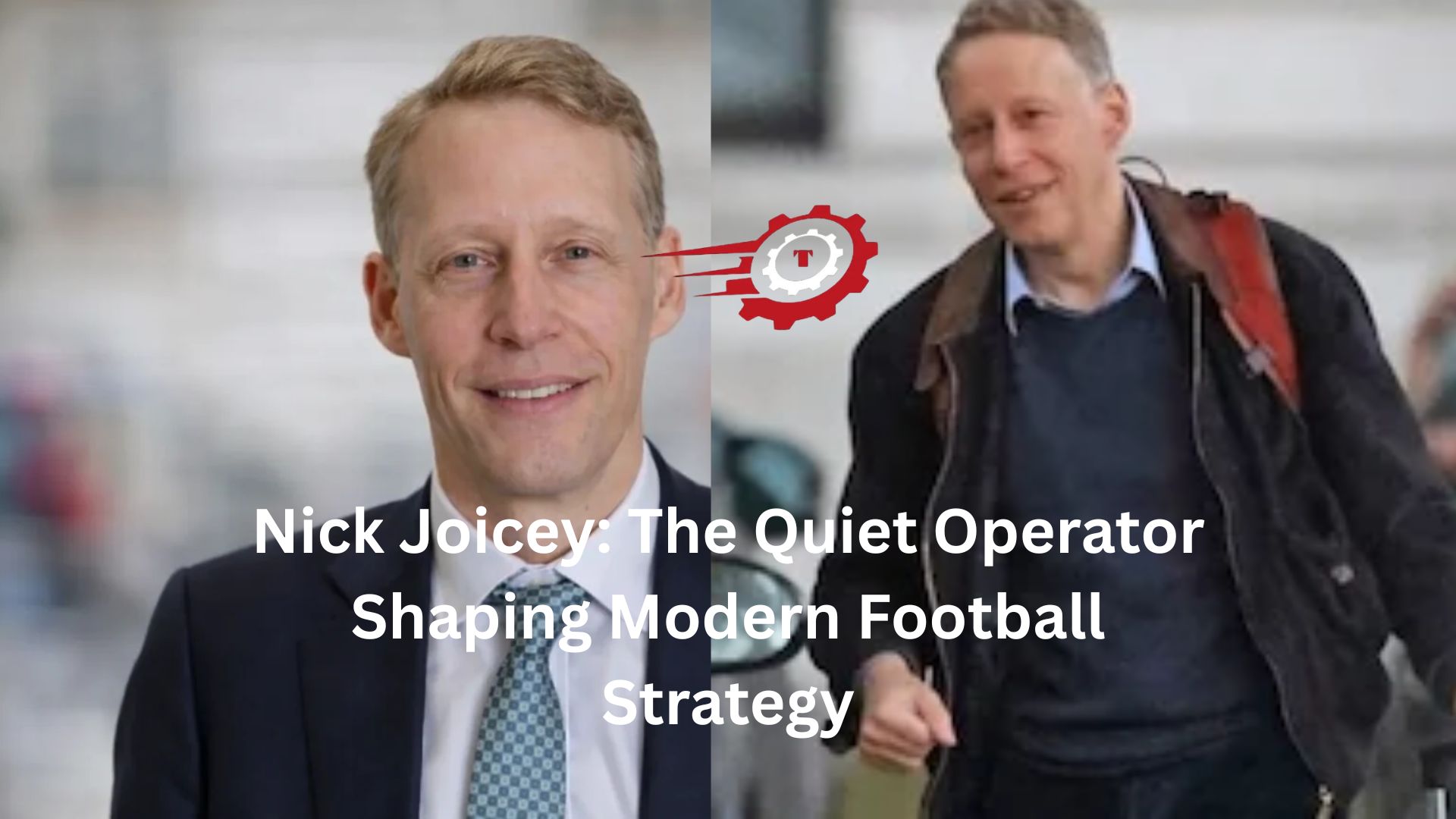
Some people in football live in the spotlight. Others shape the game from behind the curtain. Nick Joicey sits firmly in the second group—and that’s exactly why he’s worth paying attention to.
If you follow English football closely, especially clubs navigating ownership changes, recruitment strategy, and long-term planning, his name might ring a bell. If not, you’ve almost certainly seen the effects of his work without realizing it.
Joicey isn’t a headline-grabber. He’s a systems thinker. The kind of person clubs bring in when they want to move from reactive decisions to something more deliberate. More sustainable. Less chaotic.
And let’s be honest—modern football needs more of that.
From Law to the Boardroom
Nick Joicey didn’t come through the usual football pipeline. He started in law, which might sound like a detour, but in today’s game, it’s almost an advantage.
Football clubs aren’t just teams anymore. They’re complex businesses. Contracts, ownership structures, regulatory frameworks—these aren’t side issues. They’re central. Having someone who understands the legal and commercial side from the ground up is a big deal.
Imagine a club negotiating a multi-million-pound player transfer while also restructuring ownership and dealing with league compliance rules. That’s not just sport. That’s high-stakes corporate strategy with a ticking clock.
Joicey’s legal background gave him a sharp eye for detail and risk. But more importantly, it trained him to think in systems—how one decision ripples into another. That mindset would later define his approach in football.
The Norwich City Years
Most fans first became aware of Nick Joicey during his time at Norwich City. He served in a senior executive role, helping guide the club through a period that was anything but stable.
Norwich is an interesting case. It’s not a club with endless resources. It has to be smart. Careful. Strategic. One bad decision can set things back years.
That’s where Joicey’s influence showed up.
He wasn’t the face of transfers or the guy giving post-match interviews. Instead, he worked behind the scenes on structure—how decisions were made, how departments communicated, how the club balanced ambition with financial reality.
Think of it like this: if a football club were a house, Joicey wasn’t choosing the paint colors. He was reinforcing the foundations so the whole thing didn’t crack under pressure.
During his time there, Norwich had its ups and downs—as most clubs do—but the emphasis on sustainable operation became a defining trait. That doesn’t happen by accident.
Strategy Over Noise
Here’s the thing about modern football: it’s noisy.
Fans want signings now. Owners want results yesterday. Social media amplifies every decision, every rumor, every misstep. In that environment, it’s easy for clubs to drift into short-term thinking.
Joicey represents the opposite approach.
He’s part of a growing group of football executives who prioritize long-term planning over quick wins. That doesn’t mean ignoring results—it means building a structure that can consistently produce them.
Picture a club that signs a player because he’s trending versus one that signs a player because he fits a five-year tactical and financial plan. The first might get a burst of excitement. The second builds something lasting.
Joicey’s work leans heavily toward the second model.
And yes, it’s less glamorous. But it’s also far more effective over time.
Working Across Football Ecosystems
After Norwich, Joicey’s career expanded into broader football operations and advisory roles. This is where his profile gets even more interesting.
Instead of being tied to a single club, he began operating across different organizations, often in strategic or consultancy capacities. That kind of role requires a different skill set.
You’re not just solving one club’s problems. You’re stepping into different environments, each with its own culture, expectations, and challenges.
One club might be dealing with ownership transition. Another might be trying to modernize its recruitment system. A third could be struggling with internal alignment—too many voices, not enough direction.
Joicey’s value lies in diagnosing those issues quickly and offering structure. Not flashy solutions. Practical ones.
It’s a bit like being called in to fix a business that’s technically functioning but clearly underperforming. You don’t tear everything down. You adjust the parts that matter most.
The Rise of Football Executives Like Joicey
There’s a broader shift happening in football, and Joicey fits right into it.
Clubs are moving away from personality-driven decision-making toward data-informed, process-driven models. That doesn’t mean removing human judgment—it means supporting it with better systems.
A decade ago, many clubs relied heavily on a single manager’s vision. Now, you’re more likely to see layered structures: sporting directors, analytics teams, recruitment departments, executive boards.
That complexity needs coordination.
Without it, you get the classic scenario: a manager wants one type of player, the recruitment team signs another, and the ownership group wonders why nothing clicks.
Joicey’s kind of work sits at the intersection of those moving parts. Aligning them. Making sure the left hand knows what the right is doing.
It’s not glamorous. But it’s essential.
A Different Kind of Influence
Let’s pause for a second and consider how influence works in football.
You’ve got players, who influence games directly. Managers, who shape tactics and culture. Owners, who set the overall direction.
Then you’ve got people like Nick Joicey.
They influence the environment in which all those others operate.
It’s subtle. Indirect. But incredibly powerful.
For example, if a club has a clear recruitment strategy, a manager is more likely to succeed because the players fit the system. If financial planning is solid, the club avoids panic sales or reckless spending.
Those outcomes don’t happen on match day. They happen months, sometimes years, earlier—often in meeting rooms, not stadiums.
That’s the layer Joicey operates in.
What Sets Him Apart
There are plenty of executives in football. Not all of them leave a meaningful mark.
Joicey stands out for a few reasons.
First, he bridges different worlds. Legal, commercial, and sporting. That combination isn’t common, and it allows him to see problems from multiple angles.
Second, he’s comfortable in the background. That might sound minor, but in an industry full of ego, it matters. Decisions tend to be better when they’re not driven by the need for visibility.
Third, he focuses on structure rather than moments. A big signing or a dramatic win can define a season, but structure defines a club’s trajectory.
And finally, he adapts. Football changes quickly—new regulations, new technologies, shifting financial realities. Sticking rigidly to one way of doing things doesn’t work anymore.
Joicey’s career suggests a willingness to evolve, which is arguably the most valuable trait of all.
A Quick Real-World Scenario
Imagine a mid-sized club in the Championship.
They’ve just missed out on promotion. Fans are frustrated. The owner is considering a big spending push to “go for it” next season.
Now, there are two paths.
One: spend heavily on a few high-profile players, hope it clicks, and deal with the consequences later.
Two: step back, assess the squad, refine the recruitment model, align the manager and sporting department, and invest in areas that create long-term stability.
The first path is tempting. It feels decisive. It gets headlines.
The second path is slower. Less exciting. But often more effective.
Someone like Nick Joicey would likely push toward the second option—not because it’s safer, but because it’s smarter over time.
The Reality of Modern Football Leadership
It’s easy to underestimate roles like Joicey’s because they don’t produce immediate, visible results.
Fans don’t chant for strategic alignment. They chant for goals.
But here’s the truth: the quality of decision-making off the pitch directly affects what happens on it.
Poor structure leads to inconsistent recruitment. Inconsistent recruitment leads to unbalanced squads. And unbalanced squads struggle to deliver consistent results.
It’s a chain reaction.
Executives like Joicey work to stabilize that chain. To reduce randomness. To give clubs a clearer sense of direction.
That doesn’t guarantee success—nothing in football does—but it significantly improves the odds.
Why His Career Matters Right Now
Football is at an interesting crossroads.
Money is still flowing, but scrutiny is higher. Fans are more informed. Data is more accessible. Mistakes are harder to hide.
In that environment, clubs can’t rely on instinct alone. They need structure. Process. Clarity.
Nick Joicey’s career reflects that shift.
He represents a move toward professionalism in areas that were once more informal. Toward deliberate planning instead of reactive decision-making.
It’s not a coincidence that more clubs are hiring people with similar profiles—backgrounds in law, finance, analytics, and business strategy.
The game is evolving. And so are the people running it.
Final Thoughts
Nick Joicey isn’t the kind of figure who dominates headlines. He’s not supposed to.
His impact shows up in quieter ways—in how a club operates, how decisions are made, how risks are managed.
If you’re only watching the pitch, you might miss it. But if you look at the bigger picture—the structure behind the scenes—you start to see why roles like his matter so much.
Here’s the takeaway: football success isn’t just built on talent or tactics. It’s built on decision-making. Consistent, thoughtful, well-structured decision-making.
And that’s exactly where Nick Joicey has made his mark.
