

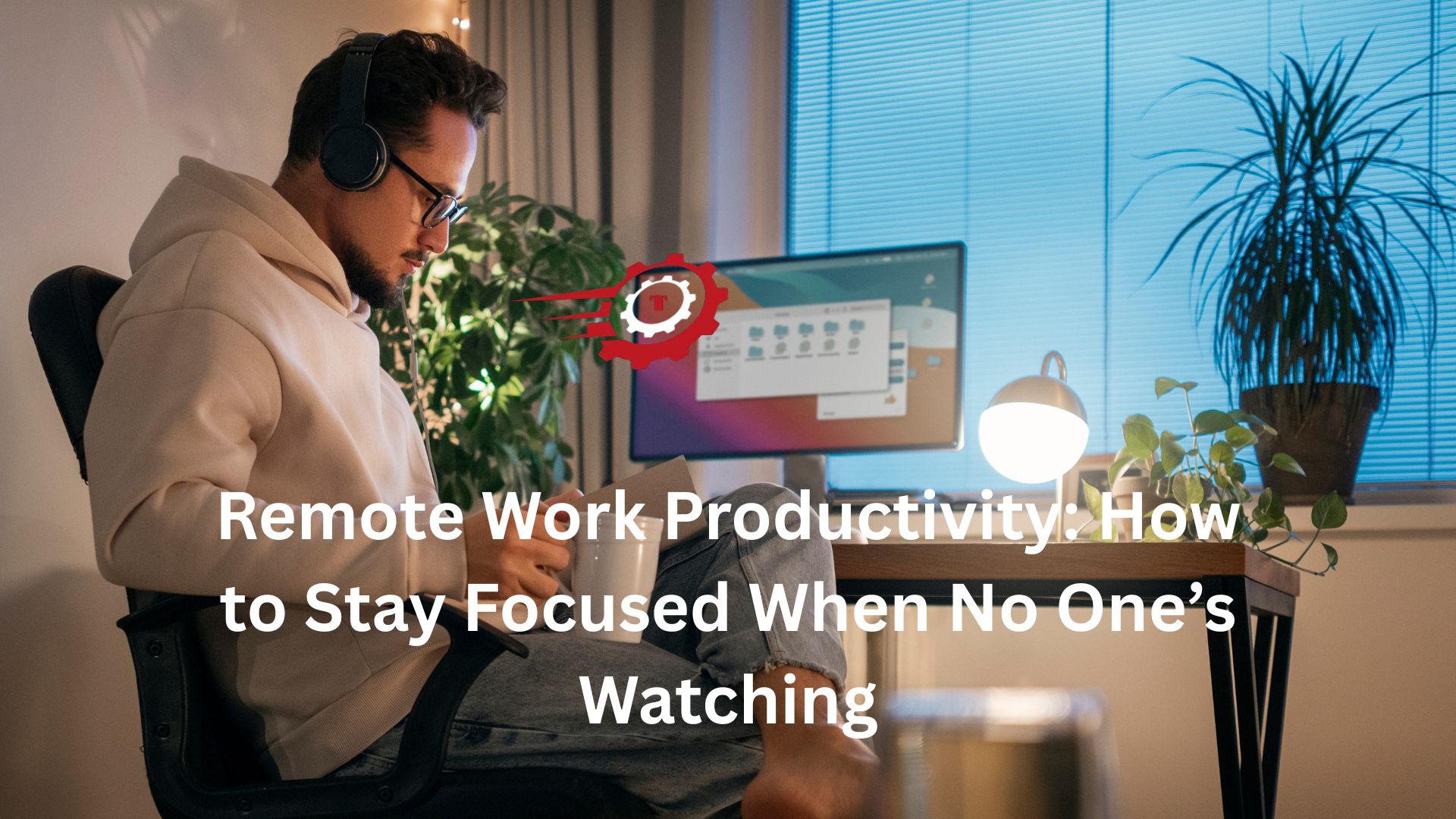
Working from home sounds easy. No commute. No office noise. No one hovering over your shoulder. At first, it feels like you’ve cracked some secret code to a better life.
Then reality settles in.
The same place where you relax, scroll your phone, and watch late-night videos is now your workplace. The line between “I’ll just take a quick break” and “where did the last two hours go?” gets blurry fast.
Staying productive at home isn’t about discipline alone. It’s about building a setup that quietly pushes you in the right direction, even on days when your motivation is low.
The Myth of Constant Motivation
Let’s be honest. No one feels motivated all the time.
Some mornings you wake up full of motivation and ready to take on the day.. Other days, even opening your laptop feels like a task. The problem is, a lot of people expect themselves to feel “on” every single day when working remotely.
That expectation alone can mess you up.
Productivity at home works better when you rely less on mood and more on structure. Think about it. In an office, you don’t ask yourself whether you feel like working. You just sit down and start.
At home, you have to recreate that starting point.
A simple example: someone who logs in at 9:00 every day, even if they’re not fully ready, usually gets more done than someone who waits to “feel focused” first. Momentum is built through action, not something you wait for before starting.
Your surroundings are either supporting your growth or holding you back
You don’t need a perfect home office. Still, you need a place that clearly tells your mind, “this is where I focus and get things done.”
Working from your bed might feel comfortable, but it quietly trains your brain to mix rest with effort. That confusion shows up later when you can’t focus or feel strangely tired.
A small desk in a corner works better than a fancy setup you don’t actually use.
Even tiny changes matter. Sitting upright instead of lying down. Keeping your phone out of reach. Having a consistent spot where you open your laptop each day.
Here’s a simple scenario.
Two people have the same job. Same workload.
One works from the couch with the TV on in the background. The other sits at a basic desk with minimal distractions. Over a week, the difference in output isn’t small. It’s obvious.
Your environment doesn’t have to be perfect. It just needs to be intentional.
The First Hour Sets the Tone
What you do in the first hour of your workday matters more than you think.
If you start by checking messages, scrolling emails, or jumping between tasks, your brain slips into reactive mode. You’re responding, not creating.
That feeling carries through the rest of the day.
Now compare that with someone who starts with one clear task. No switching. No checking notifications every five minutes. Just one thing done properly.
It creates a completely different rhythm.
Here’s the thing. The goal isn’t to finish everything early. It’s to build momentum early.
Even something small, like completing a short report or outlining a task, gives you a sense of progress. That feeling sticks.
Distractions Are Sneaky at Home
In an office, distractions are obvious. Conversations. Meetings. Noise.
At home, they’re quieter.
Your phone buzzes. You check it. One message turns into five minutes. Then ten. Then you’re watching something you didn’t plan to watch.
At the time, it hardly seems important. But it adds up.
One trick that actually works is reducing decision points. Instead of constantly choosing whether to check your phone, remove the option altogether.
Put it in another room. Turn off notifications. Use simple barriers.
This isn’t about extreme discipline. It’s about making distractions slightly harder to access.
That small friction changes behavior more than willpower ever will.
Breaks That Actually Help
Not all breaks are equal.
Scrolling social media for ten minutes doesn’t refresh your brain. It just fills the space.
A real break feels different. You step away. You move a bit. Maybe you grab a drink or look outside for a few minutes.
It sounds basic, but it works.
There’s a difference between escaping work and resetting your mind.
People who take short, clean breaks tend to return with better focus. People who drift into long, messy breaks struggle to get back on track.
You don’t need a strict schedule. Just be aware of the quality of your breaks.
The Hidden Problem of Overworking
Here’s something people don’t talk about enough.
Working from home doesn’t just reduce productivity for some people. For others, it does the opposite.
They work too much.
Without a clear end to the workday, it’s easy to keep going. One more task. One more email. One more check.
Before you know it, you’ve been “kind of working” all evening.
It feels productive, but it’s not sustainable.
A clear stopping point matters just as much as a strong start.
Even something simple like shutting down your laptop at a set time or changing rooms can create that mental shift. Work ends. Personal time begins.
Without that boundary, everything blends together.
You Don’t Need a Perfect System
A lot of advice around productivity makes things sound complicated.
Morning routines. Time-blocking. Apps. Systems.
Some of that helps. But most people don’t fail because they lack the perfect system. They fail because they can’t stick to one.
The better approach is simpler.
Find a basic structure you can repeat most days. Start at a consistent time. Focus on one task at a time. Take real breaks. Stop at a reasonable hour.
That’s it.
You can adjust and improve later. But consistency beats complexity every time.
The Social Gap Is Real
Working remotely can feel isolating, even if you don’t notice it at first.
In an office, small interactions happen naturally. A quick chat. A shared joke. A casual question.
At home, those moments disappear unless you actively create them.
Some people are fine with that. Others feel the gap over time.
You don’t need to force constant interaction. But a quick check-in with a colleague, even once a day, can make a difference.
It keeps work feeling connected instead of distant.
Some Days Will Still Be Messy
Even with a good setup, things won’t always go smoothly.
You’ll have days where focus is low. Tasks take longer. Distractions win.
That’s normal.
The mistake is turning one unproductive day into a pattern.
Someone has a rough morning, then writes off the whole day. Then the next day feels harder to start.
A better approach is to reset quickly.
Bad morning? Fine. Start fresh after lunch.
Missed a few hours? Pick one task and complete it.
Progress doesn’t require perfect days. It just needs forward movement.
What Actually Makes It Work
Remote work productivity isn’t about working harder. It’s about working with fewer invisible obstacles.
A clear space. A simple routine. Fewer distractions. Real breaks. A defined end to the day.
Nothing here is complicated. But together, they create a system that supports you instead of relying on constant effort.
Here’s the thing.
When your environment, habits, and expectations line up, work feels smoother. Not easy, but manageable.
And that’s usually enough.
Final Thoughts
Working from home can either drain your focus or sharpen it. The difference isn’t luck. It’s how you set things up.
You don’t need dramatic changes. Start small.
Pick a consistent start time. Clean up your workspace. Put your phone out of reach for a few hours. Finish one task properly.
Do that for a few days, and you’ll feel the shift.
Not overnight. But steadily.
And once that rhythm builds, staying productive doesn’t feel like a constant battle. It just becomes how your day naturally flows.